

Use dynamic variables
You can use dynamic variables to speak directly to your audience in your Riddle and personalize what they see.
Variables are automatically created for you in every Riddle, and you can use them in text blocks and form fields as pre-filled values.
Variable types
There are 4 types of variables you can use in your Riddle:
- Form field variables: Variables created by Riddle audience form entries. These variables store data entered by your audience when taking the quiz.
- Block answer variables: Variables created from Riddle content. These variables store answers to previous questions and are created automatically as you create new question blocks.
- Data layer variables: Variables created through the Riddle Data Layer. When you set up data layer items, these items are turned into variables you can use throughout your quiz.
- Result page variables (Dynamic Fields): Values that only exist once the Riddle is finished, such as the score or the time taken. They are available on the result page only.
Add a form field variable
- Create a Riddle and include a form field.

- In any subsequent block, go to a title or answer explanation text field, click on the % icon and select a select a form field from the dropdown list.

- The information your audience previously provided will then appear at your chosen position in this block.


Add a block answer variable
- Create a Riddle and include answer content.
- In any subsequent block, go to a title or answer explanation text field, click on the % icon and select a select a block answer variable from the dropdown list.

- The answer your audience previously provided will then appear at your chosen position in this block.


Add a data layer variable
For advanced marketing professionals, combining variables and the Riddle Data Layer is a great way to pass data from external sources into the Riddle, use it as dynamic content, and then pass it back to your data warehouse along with the Riddle data.
- Create a Riddle.
- In any block, go to a title or answer explanation text field, click on the % icon and select a select a data layer variable from the dropdown list.

- The variable will then appear at your chosen position in this block.

Add a result page variable
Result page variables show your audience how they did, in your own words. They are listed under Dynamic Fields in the variable picker of a text element on the result page, and they are not offered in question blocks, automated emails or integrations, because their value only exists at the end of the Riddle.
| Variable | Riddle types | What it shows |
|---|---|---|
| Time taken | Quiz, Minigame | How long your audience needed from the start to the result, as minutes:seconds, e.g. 01:42. If no time was recorded, the variable stays empty. |
| Score as number | Quiz | The points your audience scored |
| Score as percentage | Quiz | The score as a percentage of the maximum |
| Maximum achievable score | Quiz | The highest possible score |
Use cases:
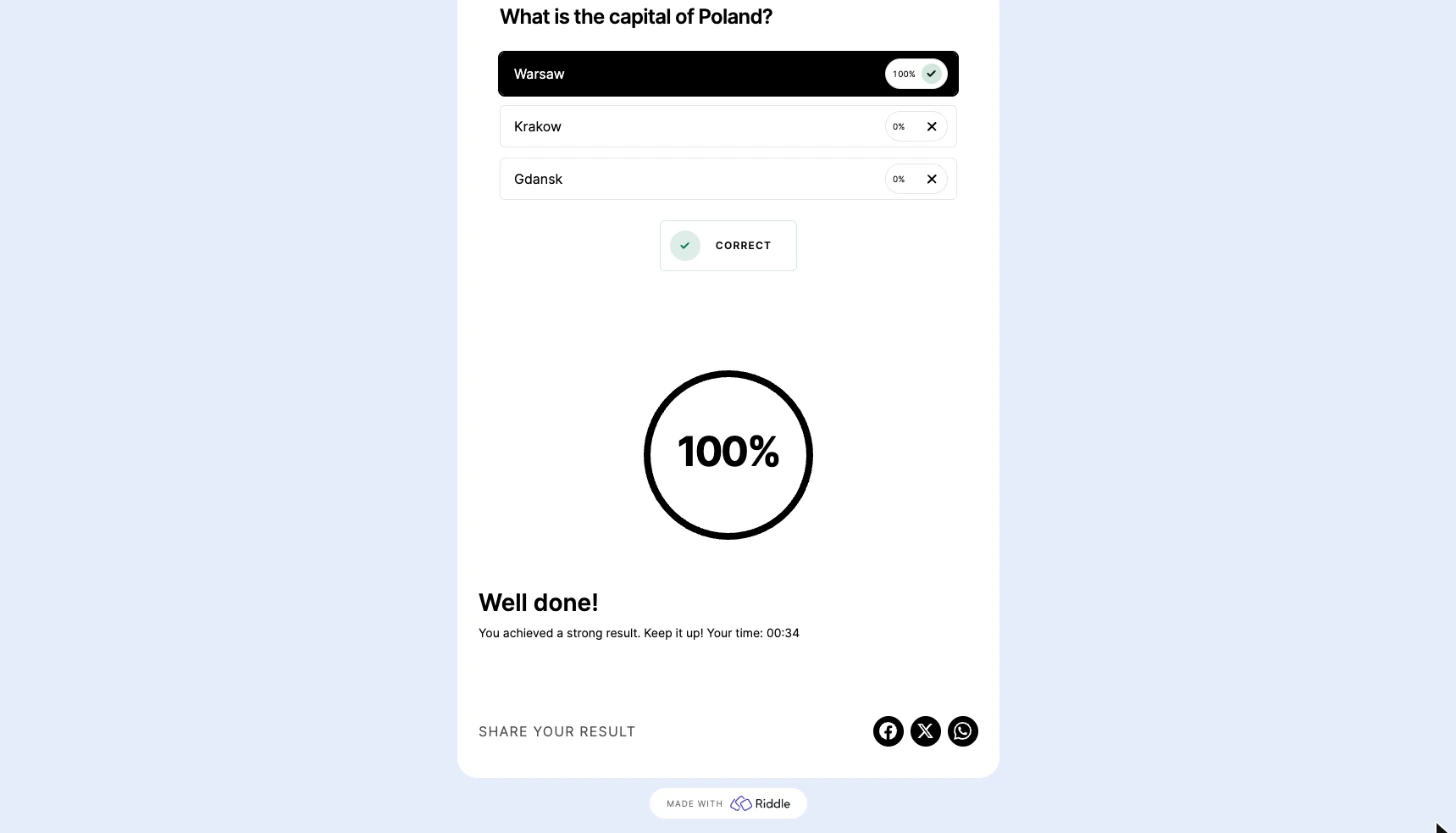
- Show the time in the result text: "You needed 01:42 to finish the quiz. Can you beat that?" with the time taken filled in per visitor.
- Speed challenges in a minigame: show the solving time under a Sudoku or Minesweeper result, so your audience can compare it with friends.
- Open a result page and double click on a text element, or add one with ADD > Text.
- Click on the VAR icon in the text toolbar and open the Dynamic Fields tab.
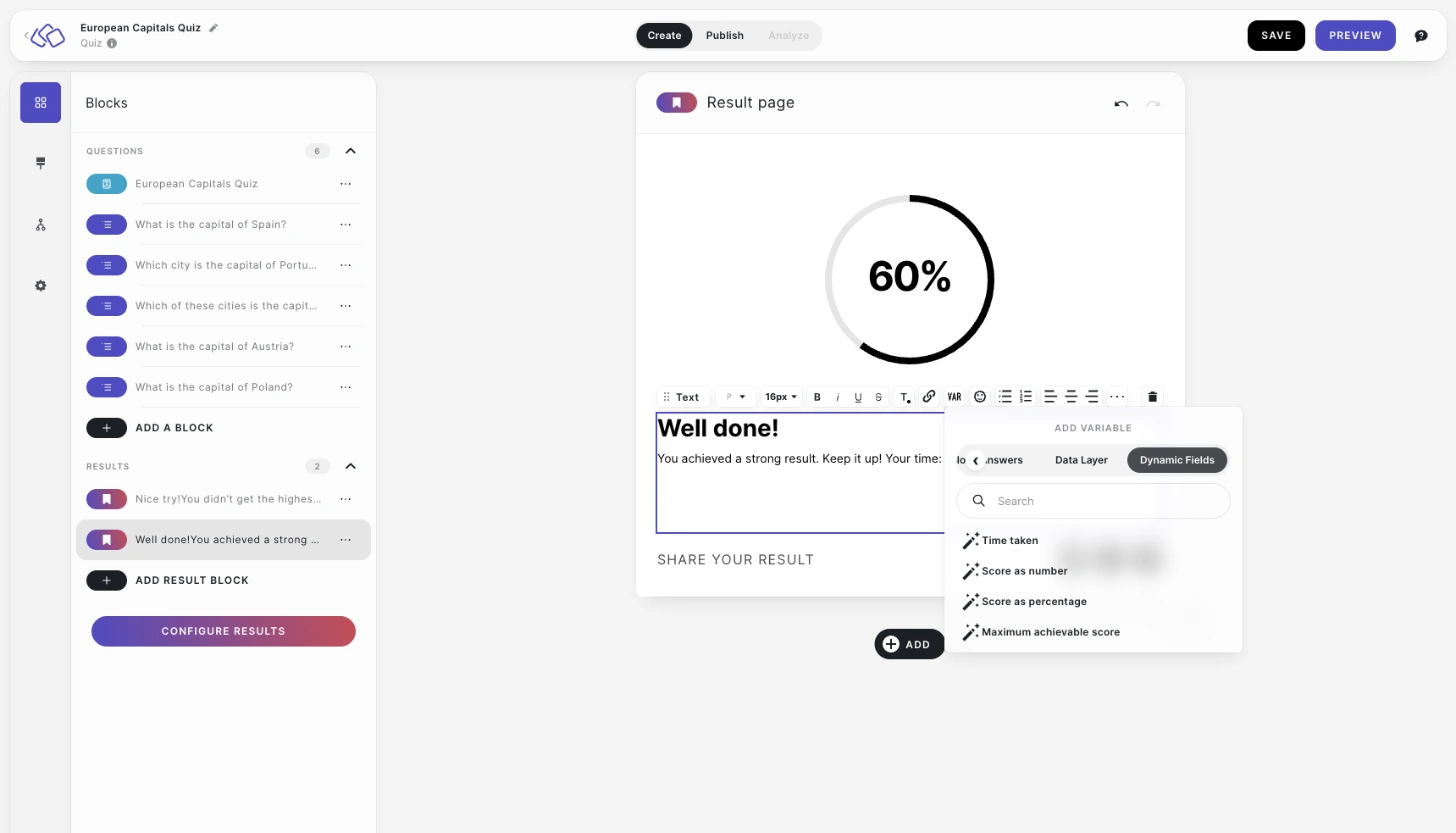
- Select Time taken or, in a quiz, one of the score variables. The variable appears at the cursor position and is replaced with the real value when your audience reaches the result page.
Good to know:
- Time taken works in existing Riddles too, not only in new ones, and it is the same time your leaderboard uses for its ranking. The leaderboard itself does not change.
- The variable is only offered in quizzes and minigames. Other Riddle types do not record a completion time.