Drafts by default
A new Riddle is created as a draft unless you explicitly ask for it to be published, and an edit to a live Riddle lands in its draft. Your embed only changes when the Riddle is published.
https://www.riddle.com/creator/api/v3/mcp
If your AI app speaks MCP, it speaks Riddle. Each person signs in with their own Riddle account, so there are no API keys to copy around and no shared credentials in a config file.
Three steps, about two minutes, no installation. The server is remote, so there is nothing to run on your machine.
https://www.riddle.com/creator/api/v3/mcp, and Claude doesn’t even need it.
Most AI apps only allow custom connectors on a paid plan, and in business workspaces an admin may have to allow them first. Prefer an MCP key over signing in? Append it to the URL as a path segment instead. The MCP documentation covers both routes, plus every tool and parameter.
All nine Riddle types are available through the MCP server, with the same blocks, scoring and design options you get in the Creator.
Scored quizzes with seven question types and results by percentage range.
Polls and surveys with Matrix, NPS, Swiper, Tier List, Rate It and more.
“Which one fits you” tests that recommend a product, a plan or a next read.
Forms with 18 field types, GDPR consent and double opt-in.
Score and winner prediction games for match days and tournaments.
Public rankings across up to ten quizzes, predictors or minigames.
Slot Machine, Wheel Spinner and Sudoku, scored and brandable.
Content sequences with media, quotes, interactive graphics and an optional form gate.
One embed that decides by rule, tag or time window which Riddle actually shows.
The builder tools accept far more than a list of questions: branching logic on quizzes, polls and forms, design presets and brand palettes, a Question Bank that serves randomized questions at view time, leaderboard connections, and publish automation covering double opt-in, email follow-ups, tracking and integrations. It is the full power of the Riddle Creator, driven from your chat.
Copy one, paste it into your AI app, answer the follow-up questions. Each of these is a real job the server carries out end to end.
Turn this blog post into a five-question quiz with a lead form and publish it.
Build a “which plan fits me” personality test that links each result to its pricing page.
Create a prediction game plus leaderboard for our next match day.
Restyle all quizzes tagged ‘summer’ to our new brand colors and republish them.
How did last week’s campaign quizzes perform? Show views, starts and submissions per day.
Build a newsletter signup form with GDPR consent and double opt-in.
Set up a daily quiz contest with a ranked leaderboard, one entry per participant.
Find the drop-off questions in this quiz and fix them.
The server ships ready-made workflows that chain the right tools in the right order and ask you only for what they cannot know: your brand colors, the URL, the project. Pick one in your MCP client instead of describing the whole job.
Built for agents, not just for chats. The numbers matter most when something runs unattended over many calls.
Every Riddle can be read back as the same build configuration the builder tools accept, so an agent can inspect an existing Riddle, change one detail and rebuild it. Edits are merges, not rebuilds: only what you send changes. And responses are trimmable, so a long-running agent does not pay for parts of the answer it will never read.
Dry-run validation (riddle_builder_validate) is available on Business and Enterprise plans.
The questions your IT and legal teams will ask, answered up front.
A new Riddle is created as a draft unless you explicitly ask for it to be published, and an edit to a live Riddle lands in its draft. Your embed only changes when the Riddle is published.
Everyone signs in with their own Riddle account. Project roles and AI permissions carry over one to one, and an agent can never reach a project its user cannot reach.
Cookie- and tracker-free by default, WCAG 2.1 accessible, ISO 27001-certified, hosted on company-owned servers in Germany and Luxembourg by a German company. See our data privacy standards →
Everything the AI builds shows up in the Riddle Creator like any other Riddle. Open it, change a question by hand, restyle it, publish it. No lock-in, no separate AI silo.
Turn every article into engagement. A news quiz under the story, a poll on the day’s debate, a prediction game for match day, built in the same chat where the piece is written and embedded before it goes live.
How publishers use Riddle →Lead-gen quizzes and product recommenders in minutes instead of sprints, on brand, with double opt-in and your CRM connected. The form sits inside the content, which is why opt-in rates stay high and every contact arrives pre-qualified by its answers.
How teams generate leads →Onboarding quizzes, employee surveys and team prediction games with leaderboards. Ask for one in your chat, publish it behind your own domain, keep every response in Europe.
Build a survey →Build for several clients from one chat. Projects, templates and brand palettes keep every account separate and on brand, and the agent works inside the permissions of whoever is signed in.
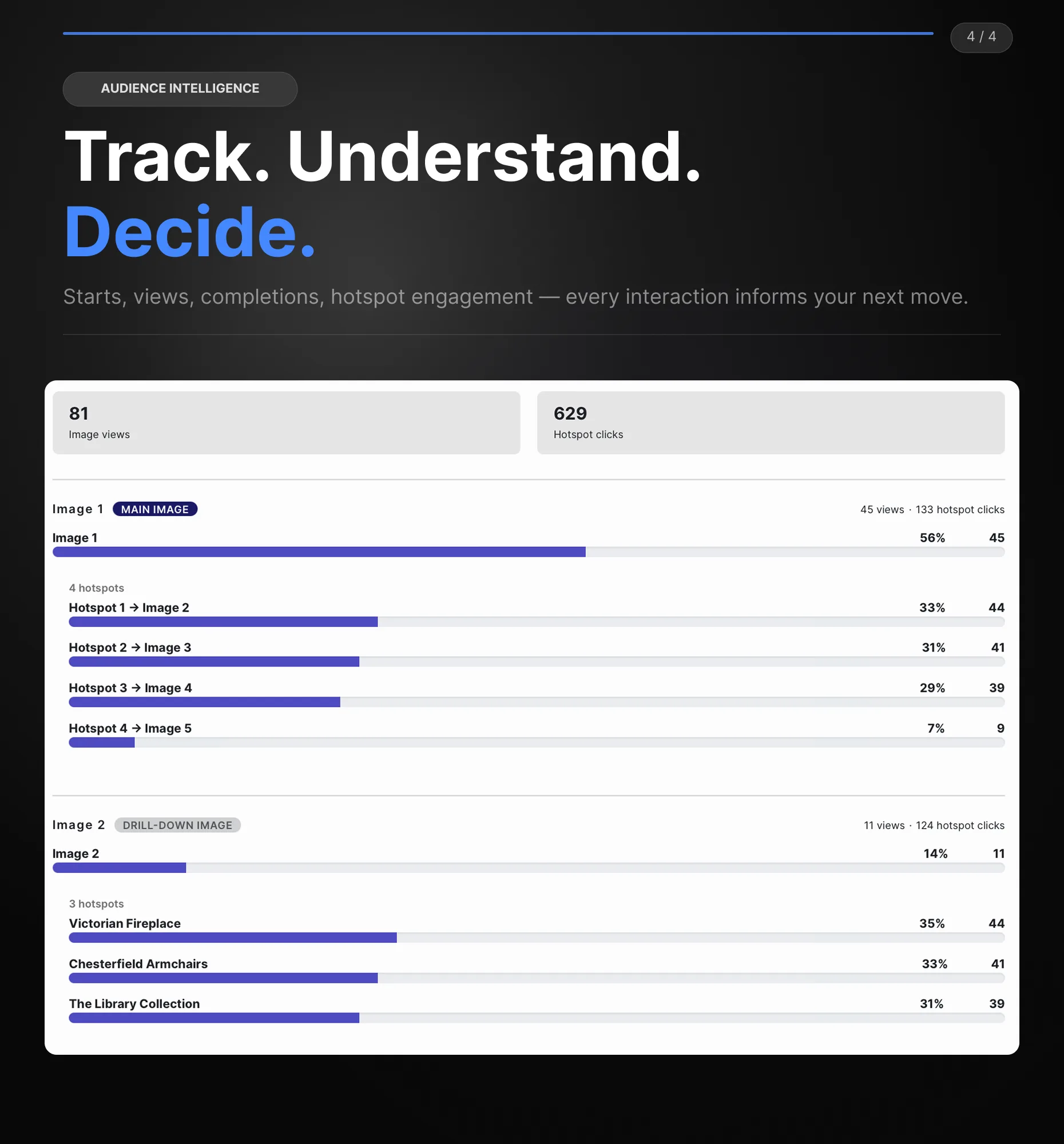
How agencies use Riddle →Building is the easy half. Ask your AI how last week’s quizzes performed and it pulls views, starts and submissions per Riddle, per project and per day, plus the answer-level breakdown for every single question.
From there the loop closes: the drop-off question is found, a fix is proposed, the edit is applied as a merge and the Riddle is republished, without ever leaving the chat. That is the part a static API call cannot do for you.


It is a remote MCP server that exposes the Riddle API to AI agents. Anything you can do through the API, such as listing, building, editing, publishing and analyzing Riddles, can be triggered from an AI chat. The server URL is https://www.riddle.com/creator/api/v3/mcp.
Any MCP client that supports remote servers, including Claude, ChatGPT, Google Gemini, Claude Code, Cursor and VS Code. The URL is the same everywhere, and Riddle is listed in the official MCP Registry as com.riddle/creator.
Yes. The MCP server works on your own Riddle account, and there is a 14-day free trial with every feature unlocked and no credit card required.
No. A new Riddle is created as a draft unless you explicitly ask for it to be published, and an edit to a live Riddle lands in its draft. Publishing is always its own step, so your embed only changes when you say go.
Preferably by signing in: you add the public MCP URL as a connector and authorize with your own Riddle account. Alternatively you can create an MCP key in your account and append it to the URL as a path segment. Signing in is the better route, because no account has to be pre-configured in the URL.
The MCP server is included in every Riddle plan. Only dry-run validation of build configurations requires Business or Enterprise.
Yes. Each person authorizes individually with their own account, and their project roles and AI permissions apply exactly as they do in the Creator. Organizations can add the connector centrally for everyone.
Yes. Riddle is 100% GDPR- and CCPA-compliant, ISO 27001-certified and WCAG 2.1 accessible, sets no third-party tracking cookies, and hosts all data on company-owned servers in Germany and Luxembourg.
The same capabilities with a different interface: the REST API is for your code, the MCP server is for your AI. The MCP server adds the parts an agent needs on top, such as 67 reference documents it can read on demand and 12 guided workflows that chain the tools in the right order.
Yes. Everything the AI builds appears in the Creator like any other Riddle and stays fully editable by hand, so you can hand a draft to a colleague who has never opened an AI chat.
https://www.riddle.com/creator/api/v3/mcp
MCP documentation Riddle REST API All integrations Support Listed in the official MCP Registry as com.riddle/creator