

Interactive content has become a cornerstone of modern digital marketing. Instead of relying solely on static landing pages or traditional forms, businesses are increasingly using quizzes, assessments, games, and interactive experiences to engage visitors, capture attention, and collect meaningful first-party data.
Riddle and ScoreApp are both notable players in the interactive content and lead generation market. Each tool helps teams leverage interactive experiences for marketing goals, but they take different approaches to how they do it.
This in-depth comparison explores how the two platforms compare across key areas like use cases, functionality, usability, pricing, integrations, and the types of users they serve.
Understanding the Role of Interactive Content in Modern Marketing
Interactive experiences pull users in instead of letting them scroll past. Strong quizzes, assessments, and games keep people on site longer, bring them back more often, and reveal what audiences actually care about.
For some teams, interactive content is about boosting engagement and brand visibility. For others, it’s a practical tool for qualifying leads and driving conversion. The difference comes down to how well a platform supports those goals, or whether it slows teams down with unnecessary limitations.
Read the full ‘Ultimate Quiz Maker Comparison (2026)’.
Riddle vs ScoreApp at a Glance
| Area | Riddle | ScoreApp |
| Core purpose | Scalable interactive content for engagement and lead capture | Assessment-driven, in-depth lead qualification |
| Number of formats | 30+ formats including quizzes, leaderboards and mini-games | Primarily scored assessments, plus surveys and landing pages |
| Customization | 50+ options, CSS editing, custom fonts, global presets | Branding focused on funnel pages |
| Media support | Images, GIFs, video, audio, media library integrations | Standard media support |
| Collaboration | Shared workspaces, granular permissions, global settings | Limited collaboration |
| Automation | API, AI, and content automation workflows | Limited automation focus |
| Integrations | Webhook, API, + native integrations (Salesforce, MailChimp, etc.) | Strong set of native integrations – but no webhook or API |
| Data privacy | EU-based, own servers, no third-party trackers | Greater reliance on external tools |
| Best fit for | Publishers, agencies, content-led teams | Coaches, consultants, sales funnels |
How Riddle and ScoreApp Position Themselves
While Riddle and ScoreApp operate in the same general category, they are built with different priorities in mind.
Riddle’s Approach to Interactive Content
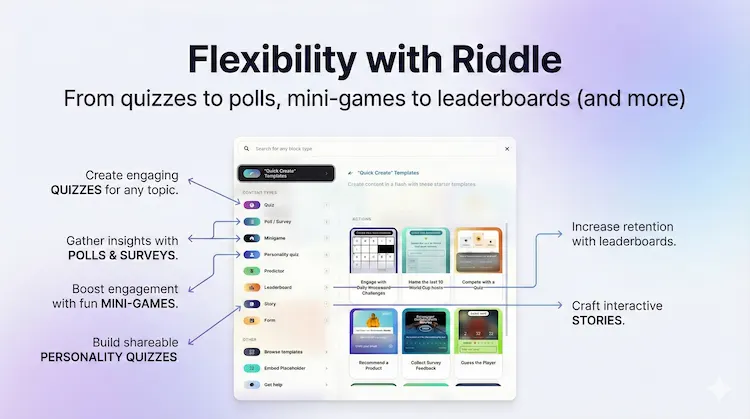
Riddle’s quiz maker is designed as a full-scale interactive content platform rather than a single-purpose quiz tool. It supports 30+ interactive formats, including quizzes, personality tests, polls, contests, surveys, leaderboards, and mini-games.
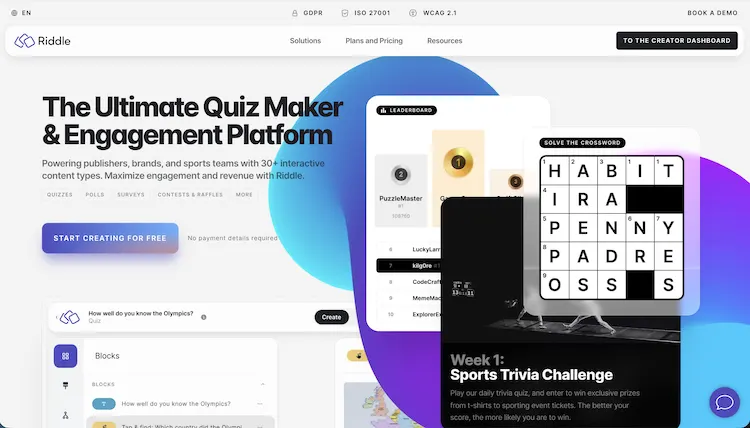
Mini-games and puzzle-style formats such as crosswords or sudoku are particularly effective for publishers and content-led brands. They typically deliver high retention, high time on site, and repeat visits, while requiring relatively low time and effort to create. Wordle at The New York Times is a standout example of how lightweight games can create daily routines and long-term audience loyalty.
Because Riddle content is embeddable and reusable, it works especially well for publishers, agencies, and brands that treat interactive content as an ongoing engagement channel rather than a one-off funnel step.
ScoreApp’s Focus on Quiz Funnels
ScoreApp is positioned around assessment-driven marketing funnels – borne out by their home page messaging ‘Attract, engage, and convert your audience’.
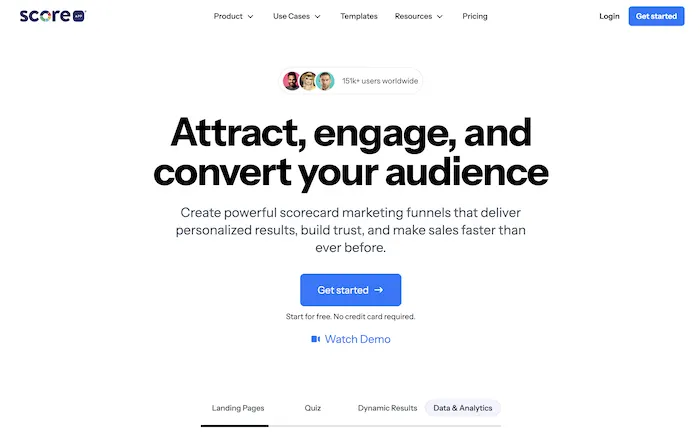
A relative newcomer, having launched in 2019, its primary use case is helping businesses like coaches, trainers, and agencies create scorecards that qualify leads, segment users, and guide prospects toward specific outcomes such as consultations, demos, or offers.
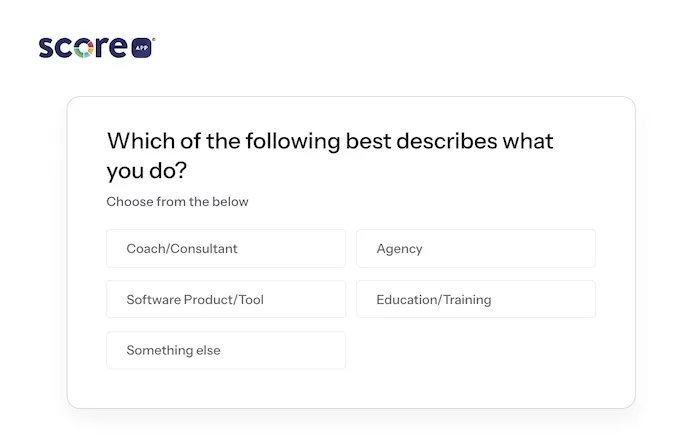
Rather than offering a wide range of formats, ScoreApp emphasizes consistency and structure. Each assessment follows a defined flow designed to support conversion-focused workflows.
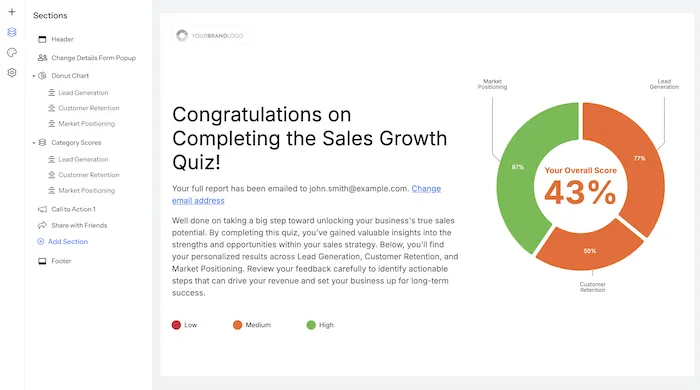
Engagement Capabilities and Content Flexibility
Content Formats and Interaction Styles
Riddle offers significantly more creative flexibility. With over 30 formats available, teams can experiment with trivia quizzes, personality tests, surveys, polls, leaderboards, and mini-game experiences (Sudoku, crosswords, and more) that boost engagement without extensive build time. This variety helps prevent audience fatigue and supports long-term content strategies.
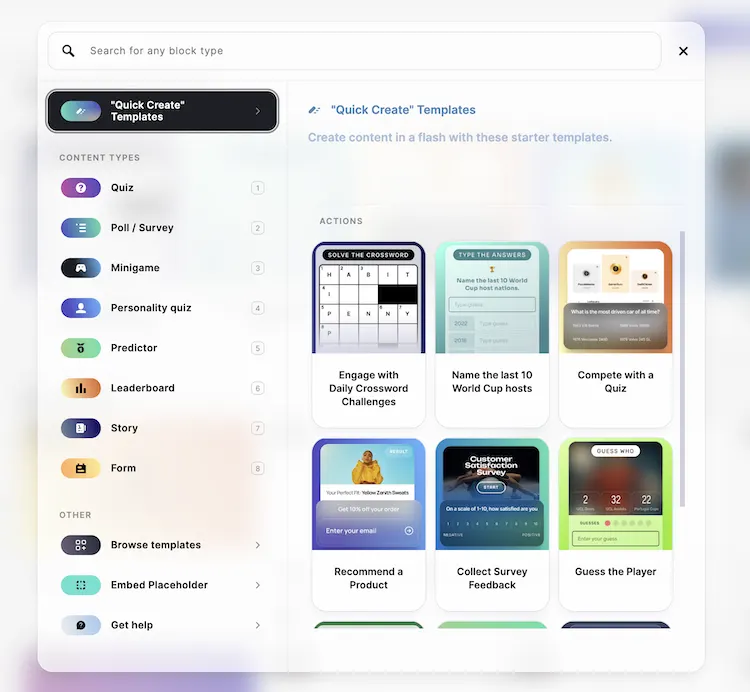
By comparison, ScoreApp’s format support is intentionally narrow.
Beyond its core scorecard and scored quiz concept, the platform primarily supports survey-style questionnaires and assessment-driven experiences built within the same funnel framework.
While these can be adapted for different use cases, they are not distinct interactive formats in the way polls, personality tests, rankings, games, or leaderboards are. Instead, most ScoreApp content follows a similar question-and-result structure designed to qualify leads and deliver personalized outcomes.
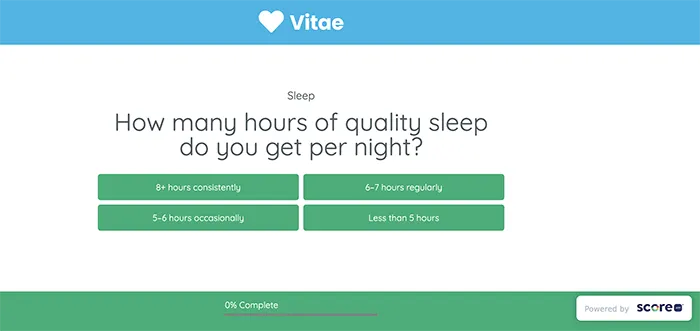
This makes ScoreApp effective for assessment-led funnels, but less flexible for teams looking to publish a wider variety of interactive content types focused on engagement, retention, or editorial experimentation.
Audience Experience and Participation Flow
Riddle experiences tend to feel lightweight and intuitive. Users can engage quickly, interact with rich media, and share results organically, making the platform well suited for top-of-funnel engagement and content-led growth.
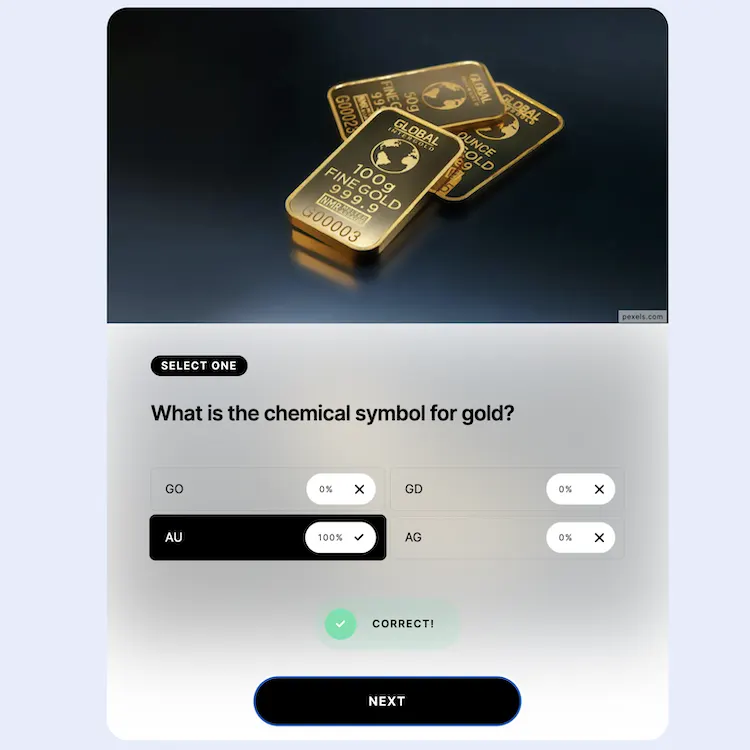
ScoreApp experiences feel more guided and deliberate. Users are led through a defined assessment journey with the expectation that results will deliver insight, recommendations, or next steps.
Lead Generation and Qualification
Capturing Leads Without Disrupting Engagement
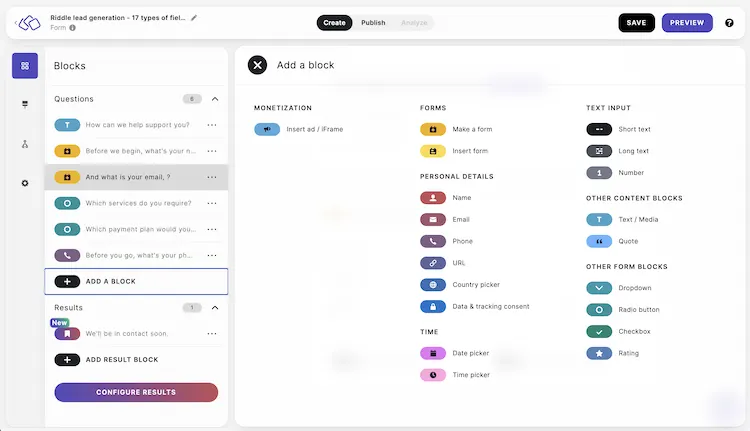
Riddle allows lead capture to be added flexibly within interactive content. Forms can appear before results, mid-experience, or at the end, depending on the desired balance between engagement and data collection.
Because lead capture is optional and configurable, teams can adapt their approach based on audience expectations without locking content into a rigid funnel structure.
Using Assessments to Segment and Qualify Prospects
ScoreApp places lead capture at the center of the experience. Assessments are designed to segment users and assign scores that indicate readiness, fit, or priority.
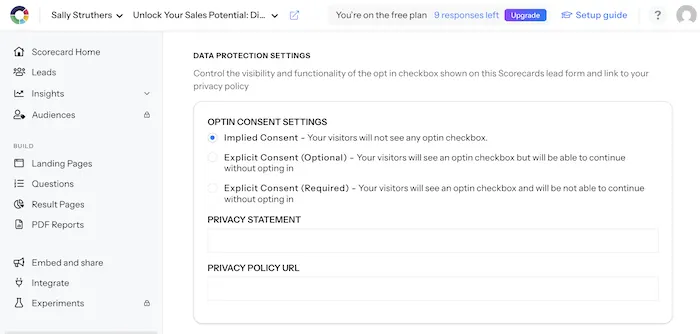
This approach supports marketing workflows where qualification and follow-up efficiency matter more than broad participation.

Customization, Branding, and Design Control
Visual Customization and Brand Consistency
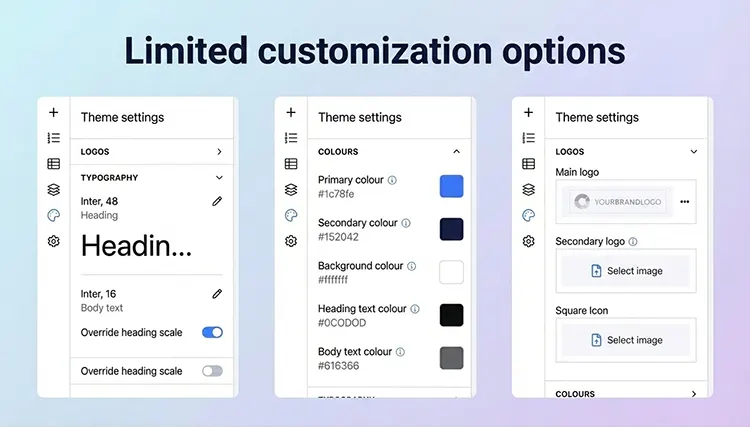
Riddle offers 50+ customization options, giving teams deep control over the look and feel of their interactive content. This includes custom fonts, color schemes, layout controls, and advanced CSS editing for teams that require pixel-level precision.
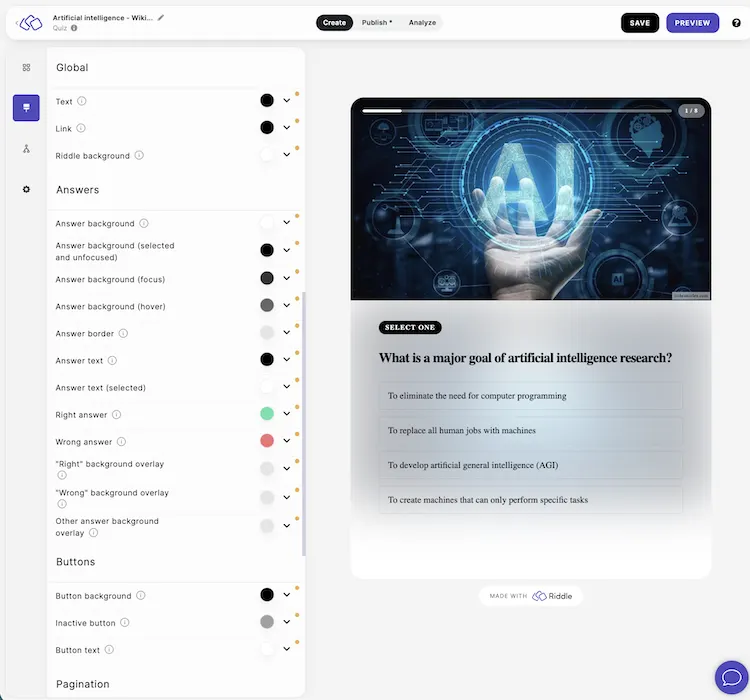
Riddle also supports custom project presets and global publish settings – which automatically apply brand styles, tracking settings, and embed behavior across all new content. This ensures visual consistency and reduces repetitive setup work, especially for teams producing content at scale.
ScoreApp supports branding through logos, colors, and custom domains. Customization is fairly limited with ScoreApp and optimized for hosted funnel pages rather than deeply embedded content – although it does support CSS for advanced users.
Collaboration and Enterprise Readiness
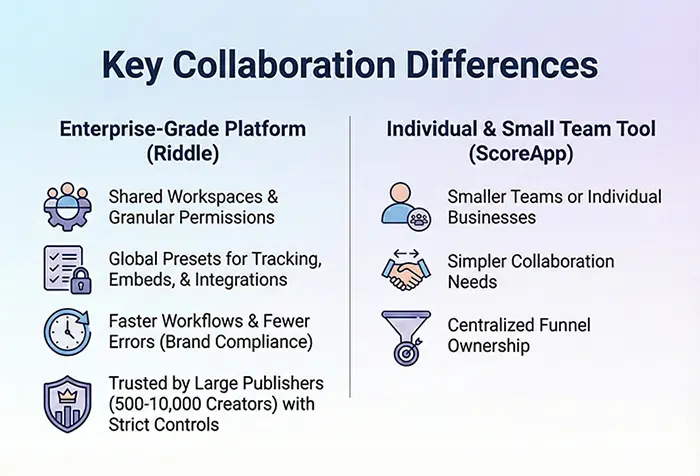
Riddle is built as an enterprise-grade interactive platform with collaboration and governance at its core. Key capabilities include shared workspaces, global presets for tracking, embeds, and integrations, as well as granular and custom user permissions.
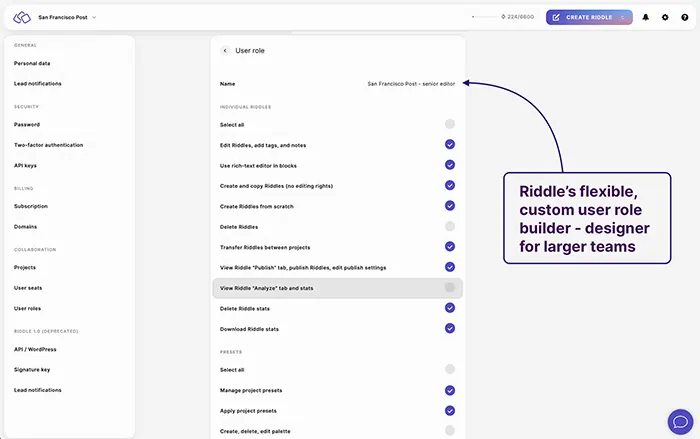
These features allow organizations to maximize usage while maintaining brand compliance and technical consistency. Editors and content teams can create and publish interactive content without worrying about tracking setup, consent configuration, or embed behavior. This leads to faster workflows, fewer errors, and clearer ownership across teams.
Riddle is trusted by some of the world’s largest publishers, many of whom operate at high volume with 500 to 1,0000 creators. This requires strict editorial, legal, and technical controls.
ScoreApp is more commonly used by smaller teams or individual businesses where collaboration needs are simpler and funnel ownership is centralized.
Media Types and Rich Content Support
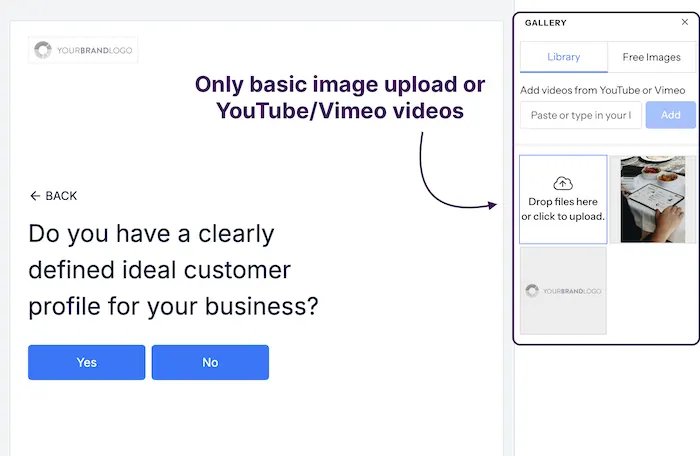
Riddle is designed as a full-featured rich media platform. Content creators can integrate images, animated GIFs, videos, and audio files directly into interactive experiences.
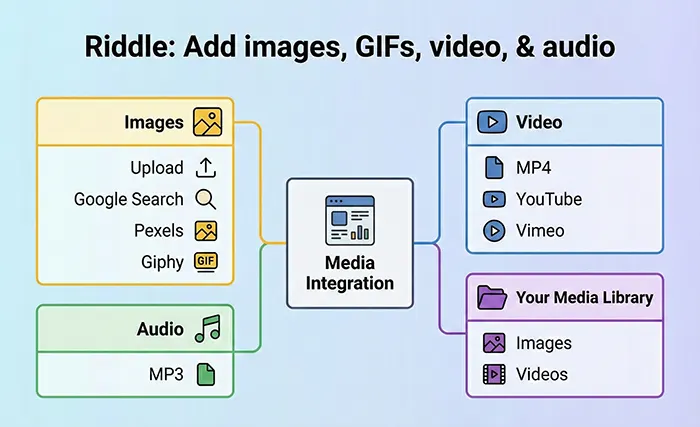
In addition, Riddle allows publishers to integrate their own media libraries and stream content directly from existing systems. This accelerates production workflows and avoids licensing or duplication issues, which is especially valuable for large editorial teams.
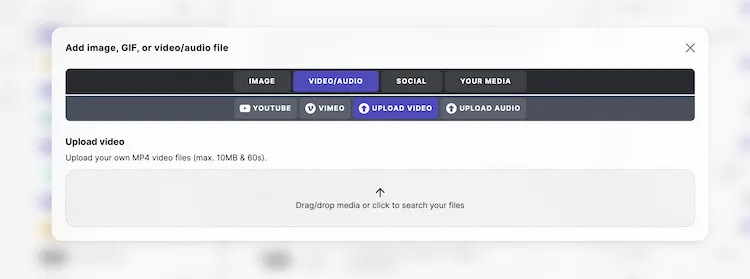
ScoreApp supports standard media within assessments, but its focus remains on structured text question-and-answer flows rather than media-driven storytelling.
API, AI, and Automation
Riddle supports advanced automation workflows that help teams scale interactive content creation and distribution – including create by topic or creating by URL (based on an article).
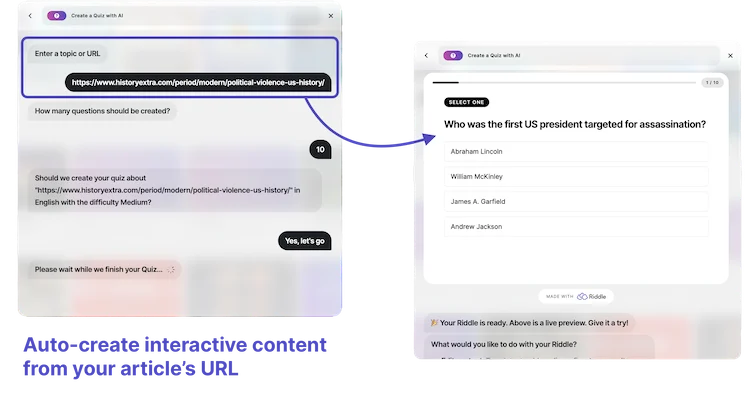
Using Riddle’s APIs and automation capabilities, organizations can:
- Programmatically generate and publish interactive content
- Sync data with internal tools or analytics platforms
- Automate tagging, categorization, and tracking
- Trigger downstream actions based on user interactions
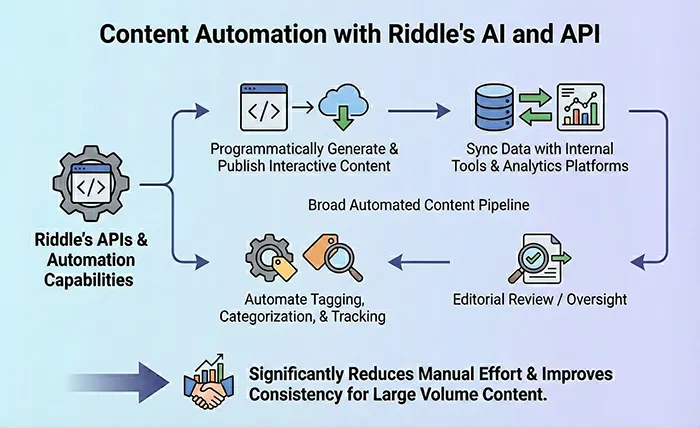
These features allow interactive content to function as part of a broader automated content pipeline rather than isolated campaigns. For teams managing large volumes of content, this significantly reduces manual effort and improves consistency.
ScoreApp has a detailed, multi-step AI wizard – designed to automate their signature assessements and lead scoring scorecards. However, it does not extend to helping create a wider range of content, like their surveys or landing pages.
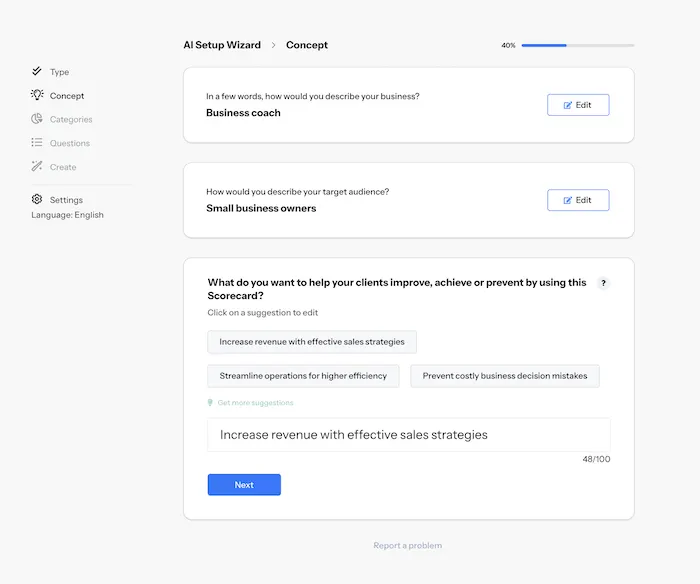
Notably, ScoreApp does not emphasize API-driven content automation, making Riddle a stronger option for organizations that rely on automation and system integrations.
Analytics, Reporting, and Insights
Engagement Metrics and Content Performance
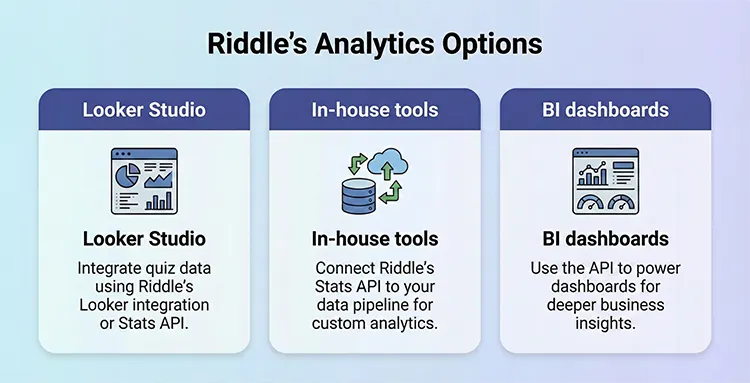
Riddle’s analytics focus on interaction behavior, including starts, completions, drop-off points, and engagement trends across formats. These insights help teams refine content and improve participation over time.
Conditional Logic and Lead Intelligence
ScoreApp
ScoreApp’s logic and reporting are closely tied to its assessment and funnel model. Reporting emphasizes outcomes such as scoring distributions, audience segments, and lead quality indicators, which helps teams prioritize follow-ups and evaluate funnel performance.
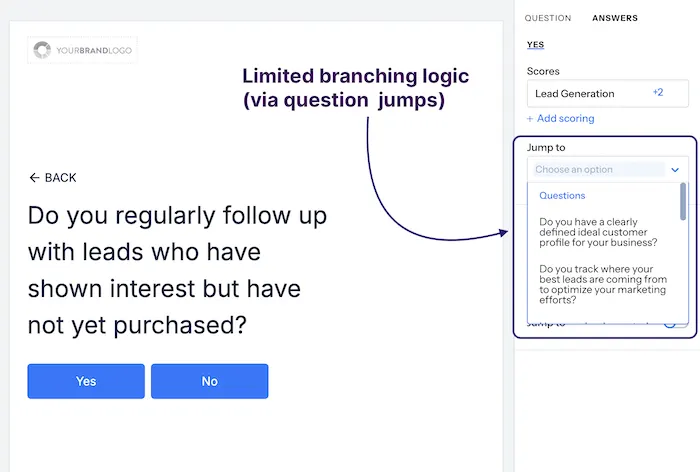
ScoreApp does support conditional logic in the form of basic logic jumps. This allows creators to show or skip questions based on a user’s previous answer, typically following a simple “if they answer X, then show Y” structure. While this works well for straightforward assessments, more advanced logic paths based on multiple answers, weighted responses, or complex branching are not a core part of the platform’s feature set.
Riddle
Riddle offers more flexible and expressive conditional logic options designed to support a wider range of interactive experiences. Logic can be applied across multiple questions and answers, allowing creators to build nuanced branching paths based on combinations of responses, weighted inputs, or progressive interactions.
This makes it possible to personalize experiences beyond simple score-based outcomes. Teams can adapt question flows, results, and content dynamically, whether the goal is deeper engagement, editorial storytelling, audience segmentation, or lead qualification.
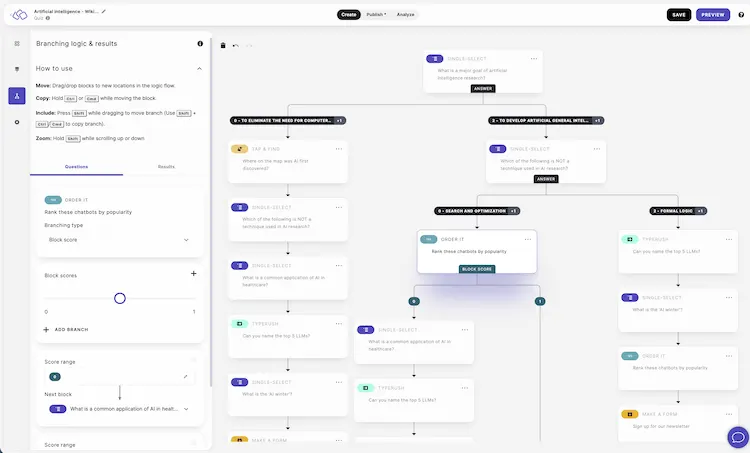
For publishers and brands experimenting with different formats and interaction styles, this flexibility enables richer experiences without forcing content into a single funnel structure.
Integrations and Marketing Stack Compatibility
Both platforms integrate with common CRM systems, email marketing tools, and automation platforms.
Riddle’s integrations are designed to support lead generation and flexible data collection, first-party tracking, and analytics workflows – including a robust API. This makes it easier to connect interactive content to existing marketing ecosystems without over-reliance on external tracking tools.
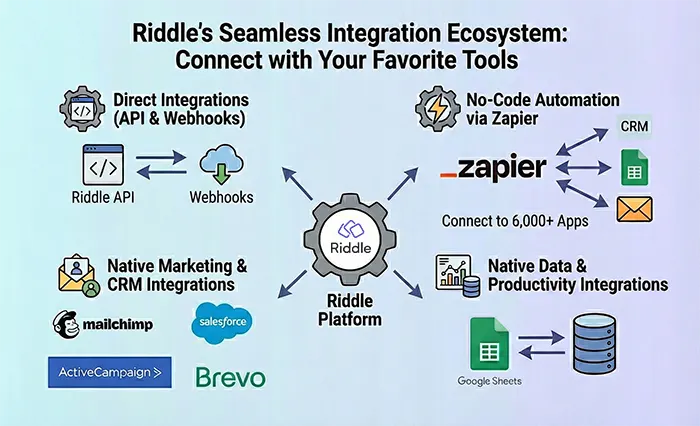
ScoreApp’s has an extensive range of integrations are optimized for follow-up workflows, allowing assessment results to trigger segmented email sequences or sales actions.
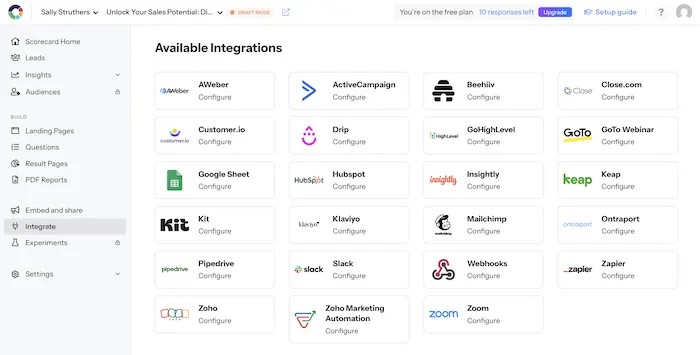
However, ScoreApp does not support webhooks or an API, consistent with their approach of targeting individual coaches and trainers vs. larger organizations.
GDPR and Data Privacy
Data privacy is a critical consideration for interactive content, especially when collecting first-party data across regions.
Riddle is 100% EU-based and operates on its own servers and infrastructure (view GDPR and privacy information). The quiz maker does not use third-party trackers in embedded content, which significantly reduces data exposure and simplifies compliance for organizations with strict privacy requirements.
This approach is particularly important for publishers and brands operating under the EU’s GDPR, ePrivacy, and similar regulations (CCPA, HIPAA, PIPEDA) where control over data processing and storage is essential.
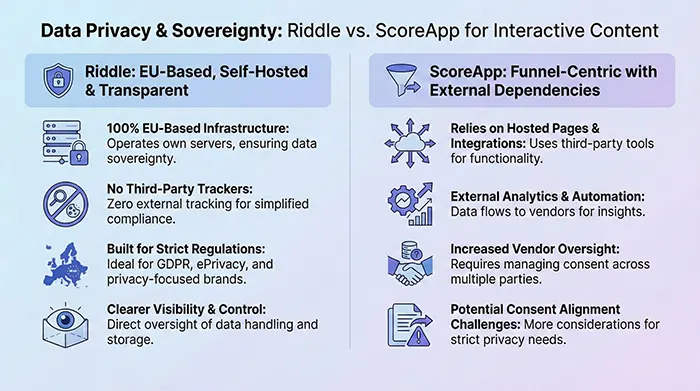
ScoreApp supports GDPR compliance, but its funnel-centric model typically relies more heavily on hosted pages, third-party integrations, and external tools for analytics and automation. For privacy-focused organizations, this can introduce additional considerations around consent alignment, data sharing, and vendor oversight.
For businesses where data sovereignty and regulatory clarity are top priorities, Riddle’s EU-based, self-hosted approach presents a lower-risk and more transparent option.
Pricing Models and Long-Term Value
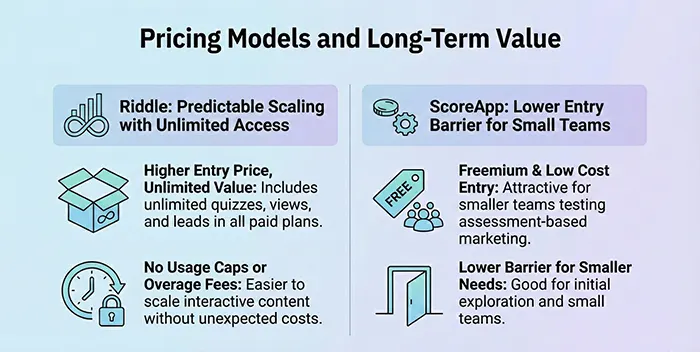
Riddle typically starts at a higher price point but is unique by including unlimited quizzes, views, and leads within all paid plans. This makes it easier to scale interactive content without usage caps or overage fees.
ScoreApp offers a lower barrier to entry, including a freemium option, which can be attractive for smaller teams testing assessment-based marketing.
Which Platform Makes Sense for Your Business?
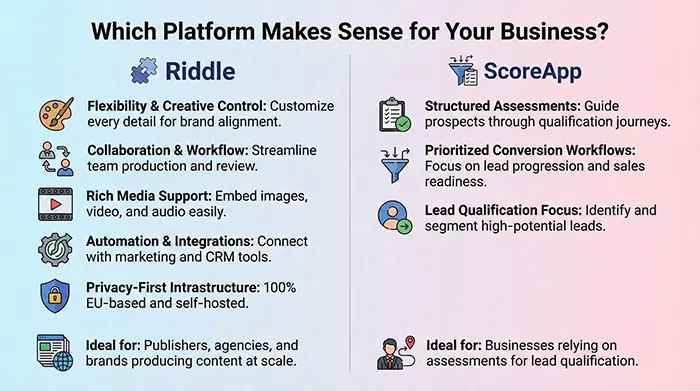
Riddle is a strong choice for teams that value flexibility, creative control, collaboration, rich media, automation, and privacy-first infrastructure. It is particularly well suited for publishers, agencies, and brands producing interactive content at scale.
ScoreApp is a good fit for businesses that rely on assessments to guide prospects through structured qualification journeys and prioritize conversion workflows.
Final Verdict
Both Riddle and ScoreApp offer capable solutions, but they serve different strategic needs. Riddle stands out for its format diversity, deep customization, enterprise-grade collaboration, rich media support, automation capabilities, and EU-based privacy-first infrastructure. ScoreApp excels when assessments are tightly connected to lead scoring and sales-driven funnels.
Choosing the right platform depends on whether interactive content is a supporting tactic or a core, scalable engagement channel within your marketing strategy.
Related quiz maker comparisons
- Qzzr – in-depth and flexible personality tests with branching logic, ideal for lead magnets
- Involve.me – solid assessment tool, especially combined with their paywalls and in-quiz payment features
- Outgrow – centered around lead generation and qualification, including calculators and basic personality tests
What is the main difference between Riddle and ScoreApp?
The main difference is how each platform approaches interactive content. Riddle is built as a flexible interactive content platform with over 30 formats designed for engagement and scale, while ScoreApp focuses primarily on scorecards and assessment-driven funnels used for lead qualification.
Which platform offers more customization options?
Riddle offers more customization options than ScoreApp, including over 50 design settings, custom fonts, CSS editing, and project presets that automatically apply branding and tracking. This level of control is especially useful for organizations producing interactive content at scale.
Can ScoreApp be used for content-driven engagement?
ScoreApp can be used for engagement, but its tools are optimized for assessment-led funnels rather than ongoing content publishing. Teams focused on editorial experimentation or audience retention may find its format variety more limited compared to broader interactive platforms.
Which platform is better for brands focused on lead generation?
Both platforms support lead generation, but they differ in approach. Riddle offers flexible lead capture within engaging content, while ScoreApp emphasizes structured assessments designed to qualify and segment leads within funnels. The better choice depends on how lead generation fits into the broader marketing strategy.
Does ScoreApp and Riddle support automation and APIs?
ScoreApp does not have an API, while Riddle provides APIs and AI automation capabilities that allow teams to programmatically create, publish, and manage interactive content. This makes it easier to integrate interactive experiences into larger content pipelines and internal systems.