
Interactive content has quietly become a key part of the foundation of modern digital marketing. For marketers, publishers, and content-led teams, formats like quizzes, polls, games, and assessments are no longer experiments tucked into campaigns. They are core tools for engagement, audience insight, and long-term growth, especially for Gen Z (13-28 year olds) – 43% engage with interactive formats like polls and quizzes.
As interactive content has matured, the platforms behind it have taken very different paths. Some are built primarily around lead qualification and funnel optimization. Others focus on engagement, editorial scale, and first-party data across large audiences.
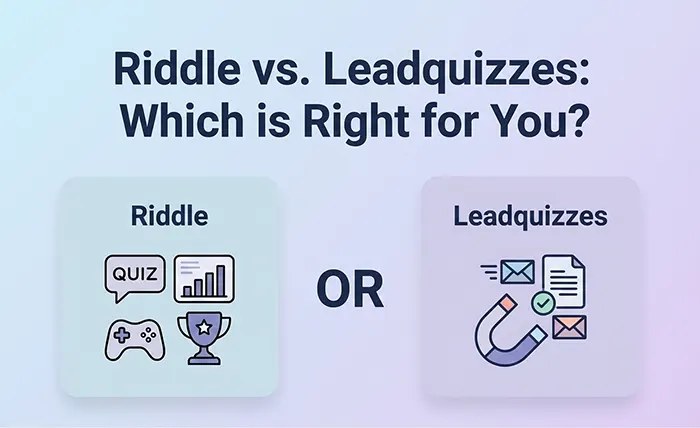
This comparison looks closely at two platforms often mentioned in the same conversations: Riddle and LeadQuizzes. Both enable interactive experiences, but they are designed for different strategies, workflows, and definitions of success.
Rather than scoring features or declaring a single winner, this article explores how each platform is typically used, where the differences really matter, and how to think about choosing the right fit.
The Role of Interactive Content in Modern Marketing
Interactive content solves several problems at once.
At a basic level, it captures attention. Compared to static articles or landing pages, interactive formats consistently drive longer sessions, higher completion rates, and more repeat visits.
That extra time on site compounds into stronger brand recall, better ad performance, and more loyal audiences.
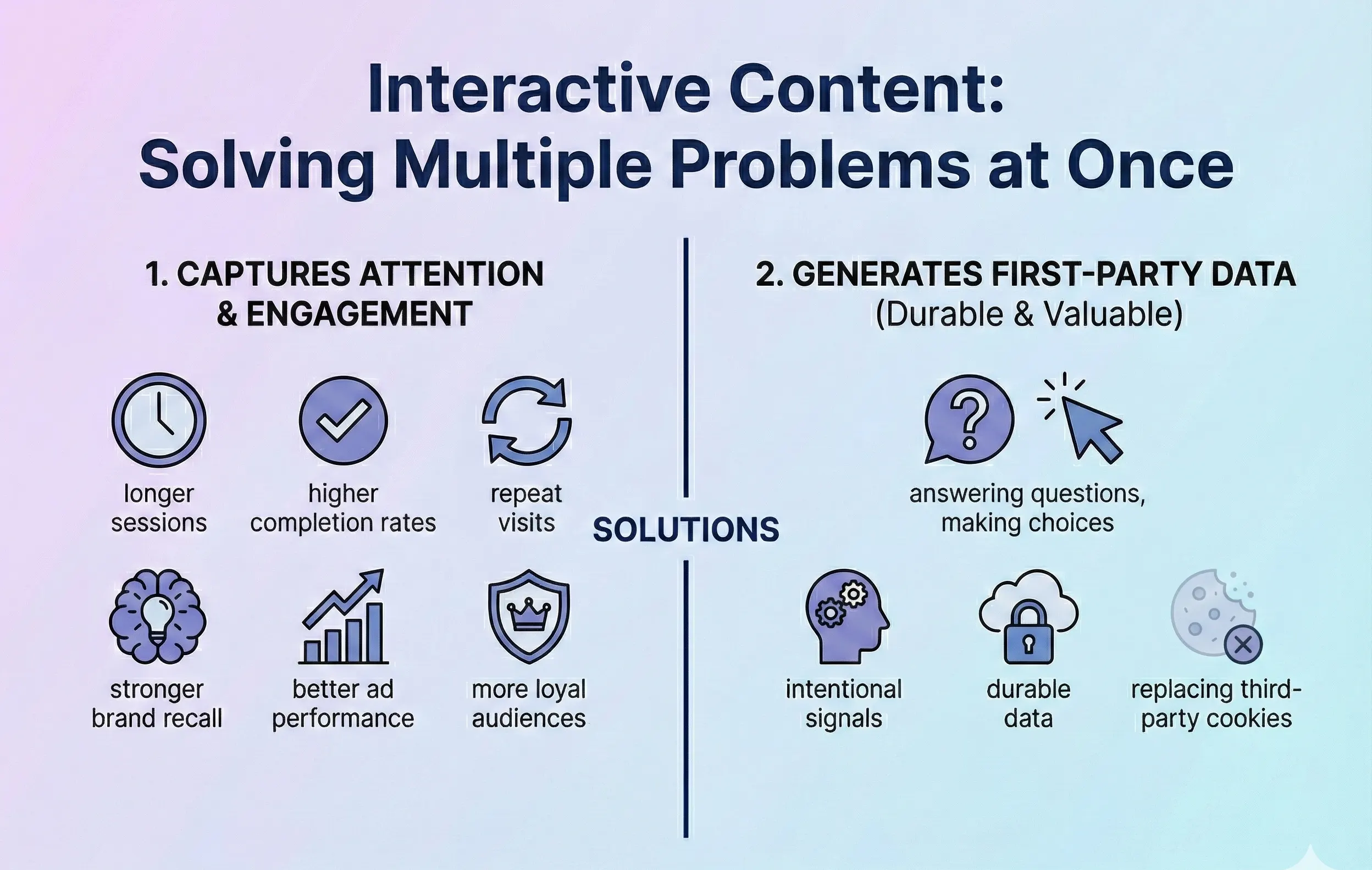
It also generates first-party data. When people answer questions, make choices, or play through experiences, they share intentional signals about interests and preferences. That data is more durable than pageviews and increasingly valuable as third-party cookies fade.
Some quiz makers treat interactive content mainly as a qualification step inside a funnel. Others treat it as a publishing format in its own right – something designed to attract, entertain, and keep people coming back.
That distinction shapes nearly every product decision, and it’s central to understanding the differences between Riddle and LeadQuizzes.
Overall Platform Capability Comparison
| Capability Area | Riddle | LeadQuizzes |
|---|---|---|
| Strategic Focus | Built for teams publishing interactive content frequently, with engagement, retention, and audience growth as primary goals. | Built around marketing funnels, using quizzes to capture, score, and route leads into sales workflows. |
| Range of Formats | Supports 35+ formats, including quizzes, polls, surveys, leaderboards, and game-style experiences that increase time on site. | Focuses mainly on quizzes and assessments designed for lead capture and segmentation. Has basic calculator format. |
| Audience Experience | Prioritizes lightweight participation that encourages completion and repeat visits, with optional lead capture. | Uses structured journeys tied to conversion goals, which can add friction for casual users. |
| Customization & Branding | Extensive customization including CSS, custom fonts, and presets that enforce brand consistency at scale. | Campaign-level branding and templates with limited global governance. |
| AI & Innovation | Uses AI to speed up creation and automatic creation across multiple interactive formats – with option for human editorial review. | Relies largely on basic AI wizard requiring multiple manual steps to create a finished quiz. |
| Automation & APIs | APIs and MCP support publishing pipelines, embeds, and tracking across large volumes of content. | Integrations focus on sending quiz data into CRM and marketing tools. |
| Analytics | Engagement-first insights such as completion, drop-off, and time on site. Custom dashboards with Looker Studio. | Outcome-focused metrics centered on scoring and lead performance. |
| Data & Privacy | EU-based, no third-party trackers, supporting first-party data and simpler compliance. | Uses hosted pages and third-party tools in some workflows. |
| Typical Use Cases | Ongoing editorial publishing, monetization, and audience engagement at scale. | Campaign-driven lead generation and qualification. |
Platform Positioning and Strategic Focus
How Riddle Positions Itself
Riddle positions itself as an enterprise-grade interactive content platform built for engagement at scale. Its core users include publishers, media companies, agencies, and marketing teams that publish frequently and care deeply about time on site, repeat visits, and first-party data ownership.
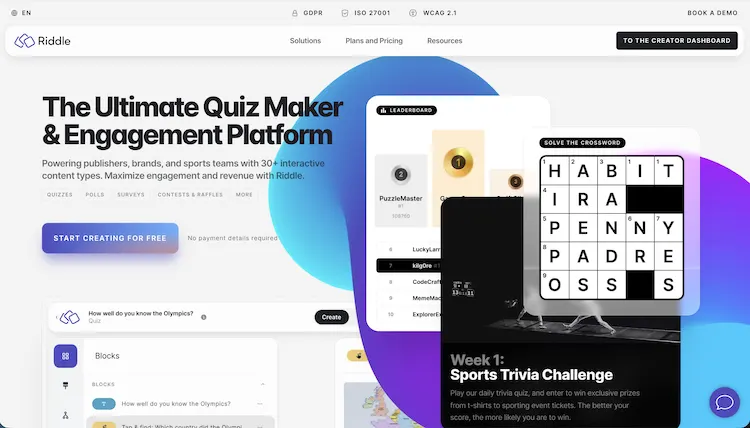
Rather than centering everything around lead scoring, Riddle’s quiz maker emphasizes flexibility. Interactive content can be used to engage anonymous readers, enrich newsletters, support sponsored content, collect opt-in leads, or simply create reasons for audiences to return.
Importantly, Riddle is designed to fit into existing content operations. Editors and marketers can publish interactive pieces quickly, while global presets handle branding, tracking, and compliance behind the scenes.
How LeadQuizzes Positions Itself
With Neil Patel, a famous marketer, as its brand ambassador, LeadQuizzes is positioned more directly around lead generation and qualification. Its messaging and feature set focus on building quizzes and assessments that segment users, assign scores, and route leads into downstream marketing or sales workflows.
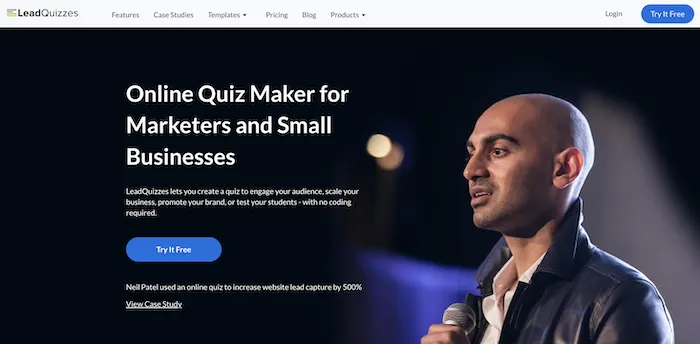
For teams running campaigns where capturing and qualifying leads is the primary goal, this positioning is straightforward and intentional. Interactive content is treated as a structured journey, often with gated results and follow-up actions tied closely to CRM systems.
This difference in positioning influences everything from format design to analytics.
Content Formats and Engagement Range
Riddle’s Format Breadth
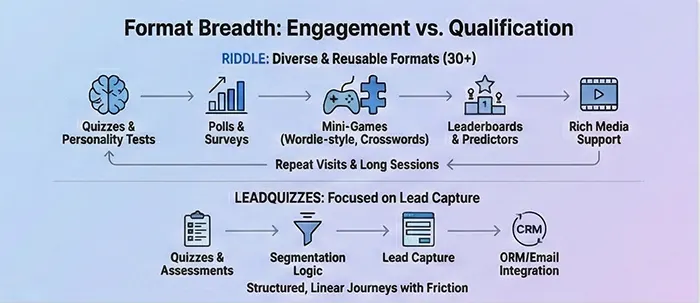
Riddle supports more than 35 interactive formats, spanning both classic and emerging use cases. These include quizzes, polls, surveys, and personality tests, as well as leaderboards and prediction-style formats.
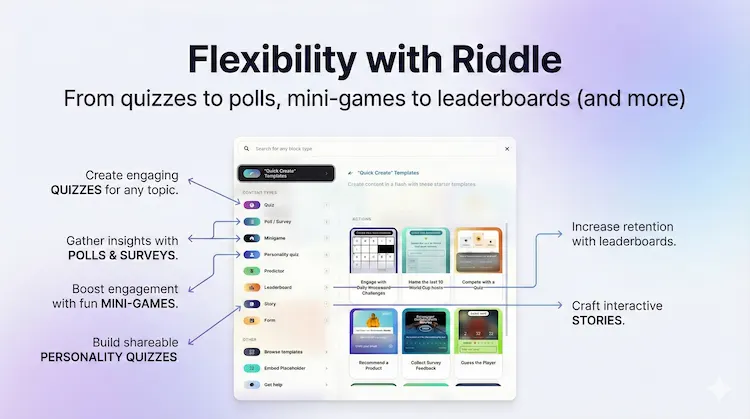
One of Riddle’s defining strengths is its support for interactive games. Mini-games like crosswords, sudoku-style puzzles, and Wordle-style experiences are built directly into the platform. These formats consistently drive high retention and long session durations, often with surprisingly low creation effort.
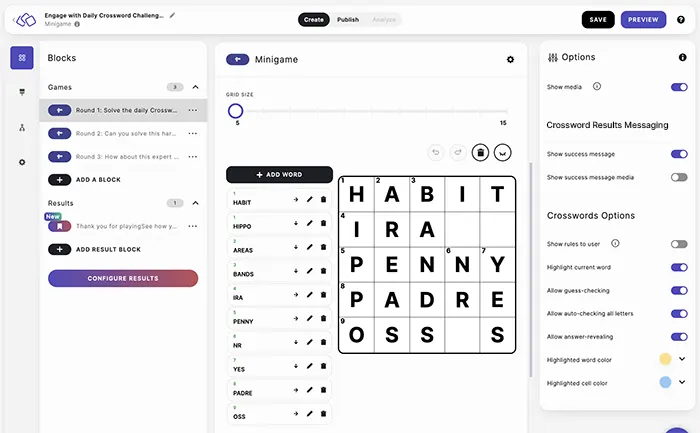
The popularity (and success) of the New York Times Wordle is a useful reference point. Simple mechanics, published consistently, can become daily habits. Riddle makes it possible for publishers and brands to experiment with similar engagement loops without custom development.
Because these formats are quick to build, teams can publish often without overwhelming editors or designers. Over time, that cadence builds real audience loyalty.
LeadQuizzes’ Format Scope
LeadQuizzes offers a more focused set of formats, primarily quizzes and assessments designed for lead capture and segmentation. These formats tend to be more structured, with defined paths, scoring logic, and outcomes tied to user attributes.
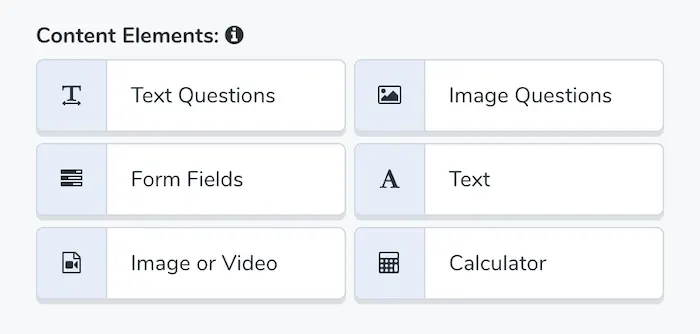
For marketers running qualification-driven campaigns, that focus can be a benefit. The platform encourages clarity around objectives and funnels users toward specific endpoints.
At the same time, it offers less flexibility for teams looking to experiment with game-like engagement, editorial formats, or repeatable daily content.
Audience Experience and Participation Flow
One of the most noticeable differences between Riddle and LeadQuizzes is how the experience feels to the audience.
Riddle interactions tend to be editorial and engaging. Users can jump in quickly, participate without friction, and complete an experience without being forced to share personal information. Lead capture can be added when it makes sense, but it’s optional.

This works well for top-of-funnel engagement and anonymous audiences. It reduces drop-off and invites participation from people who may not be ready to convert.
LeadQuizzes experiences are usually more structured. Users are guided through a defined journey with clear outcomes and follow-up. This can increase lead quality, but it can also introduce more friction for casual visitors.
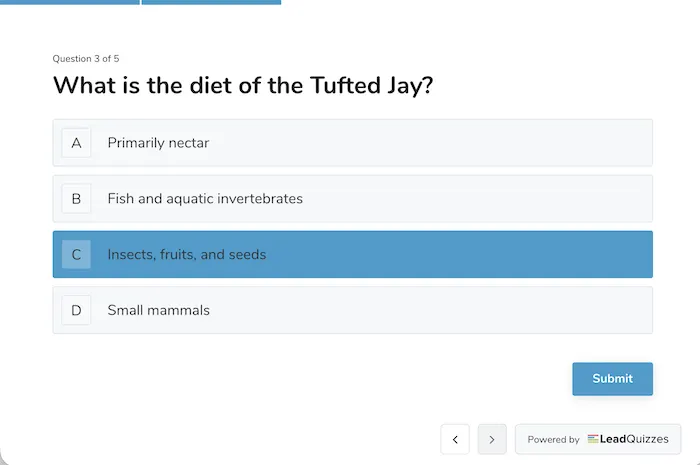
Neither approach is inherently better. They simply reflect different assumptions about audience intent.
Lead Generation and Qualification Approaches
Riddle supports lead generation in a flexible, context-driven way. Email capture, gated results, and integrations with CRM and email platforms are available, but they are not mandatory.
Using Riddle’s block-based builder, teams can choose when and how to ask for information at any point in the experience – at the beginning, during participation, or just before results are revealed. In internal Riddle Lab testing, placing a form between the final question and the results page generated nearly twice as many submissions as any other placement.
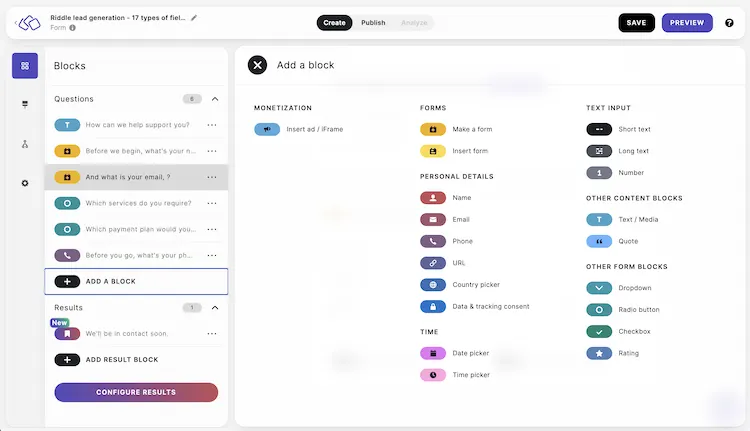
This is especially useful for publishers and brands balancing engagement with monetization. A personality quiz might remain ungated, while a survey or predictor tied to a campaign might include optional lead capture.
LeadQuizzes, by contrast, is built around funnel-centric workflows. Lead capture and scoring are central features, and the platform encourages teams to think in terms of qualification logic and downstream actions.
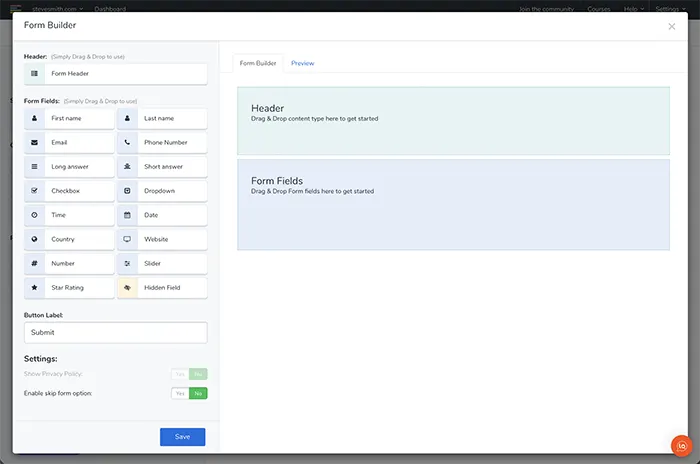
For sales-driven organizations, that clarity can simplify execution. For content-led teams, it may feel more rigid.
Customization and Branding at Scale
Riddle’s Customization Model
Riddle offers more than 50 customization options, including CSS editing, custom fonts, and deep visual control. Beyond individual projects, it supports custom project presets that automatically apply brand styles, tracking parameters, and embed settings.
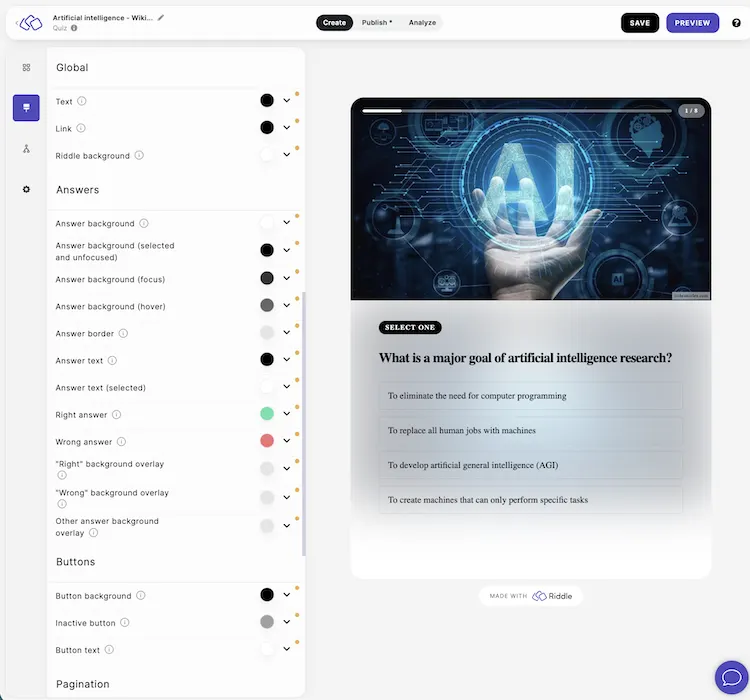
At scale, this matters. Editors don’t need to think about tracking or compliance every time they publish. Those decisions are handled centrally, ensuring consistency and reducing errors.
LeadQuizzes Customization
LeadQuizzes provides fairly basic branding and customization suitable for straightforward implementations. Logos, colors, and layouts can be adjusted to match brand guidelines – but notably, there is no option to edit CSS or upload custom fonts, which is a key requirement for publishers and brands.
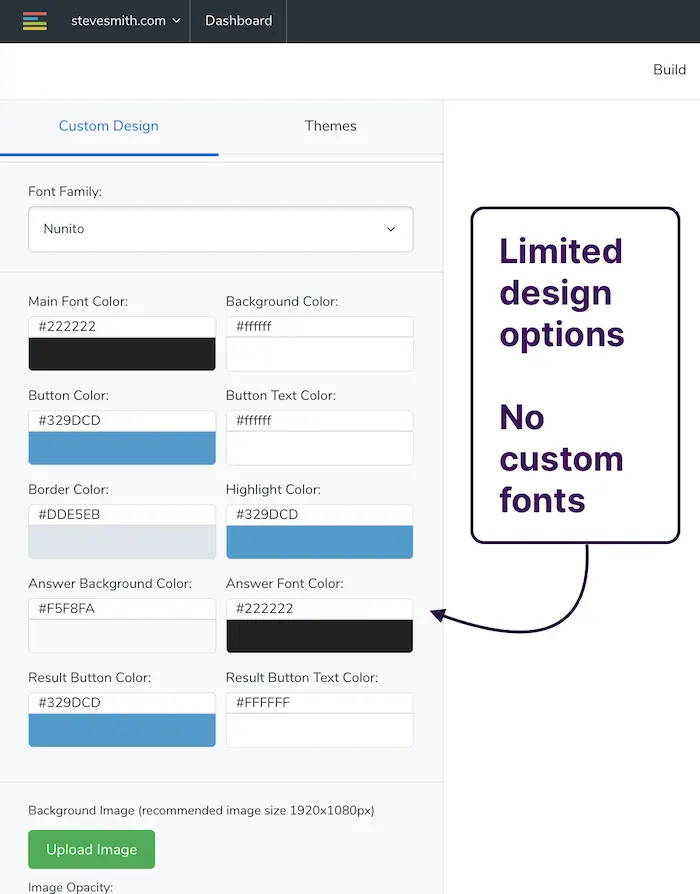
Further, it does not support global presets and enterprise governance. For smaller teams, that’s often sufficient. For organizations publishing at volume, the difference becomes more noticeable.
Collaboration and Enterprise Readiness
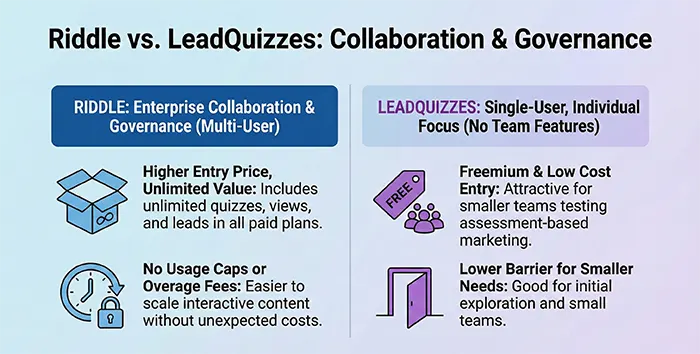
Riddle is built for collaboration. Shared workspaces, granular user permissions, and centralized controls make it well suited for large editorial and marketing teams.
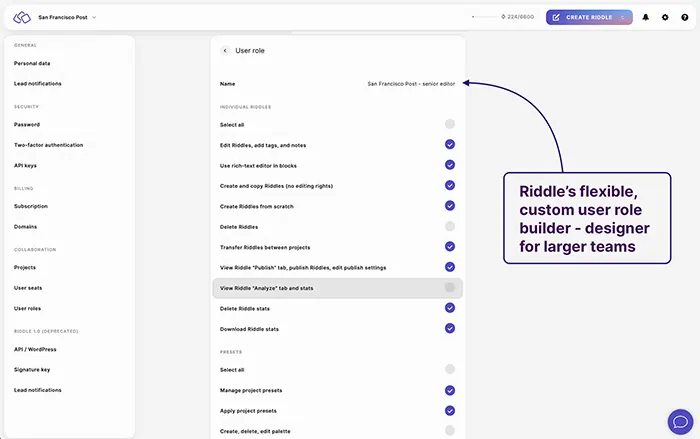
Global presets for tracking, embeds, and integrations mean governance happens once, not on every project. This enables faster workflows while maintaining brand and compliance standards. Riddle is used by thousands of publishers and media companies, and that influence shows in its emphasis on scale and reliability.
Importantly, LeadQuizzes does not support multiple users or team collaboration. Its feature set is more aligned with individual contributors or agencies running discrete campaigns rather than newsroom-style collaborative workflows.
Media and Rich Content Support
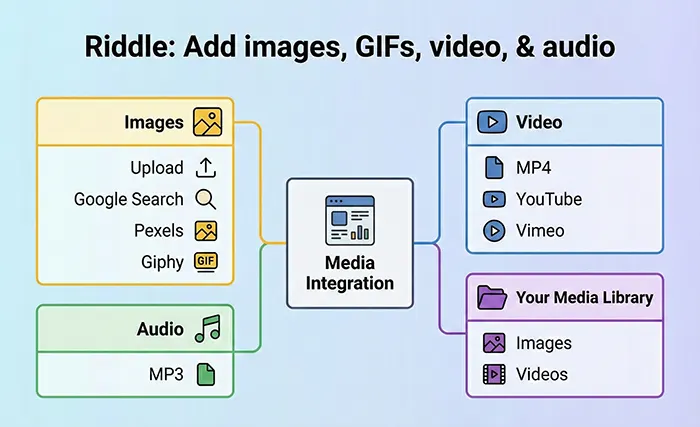
Riddle supports images, GIFs, video, and audio, with the ability to integrate and stream media directly from a publisher’s own libraries.
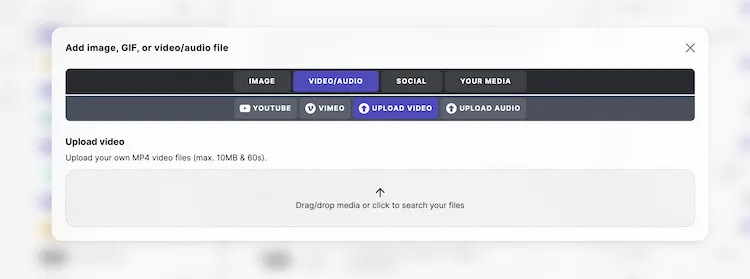
This speeds up workflows and avoids licensing issues. Teams can reuse existing assets without duplicating uploads or managing external hosting.
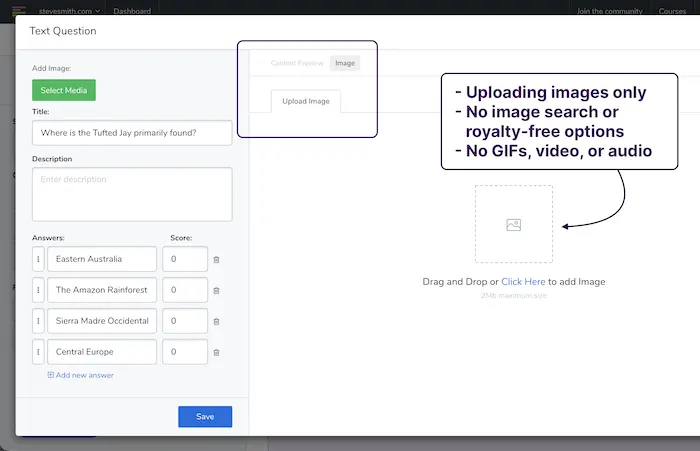
LeadQuizzes only supports adding images to quizzes via manual uploads, and does not emphasize deep integration with publisher media ecosystems.
AI Features and Content Creation Momentum
AI has become a useful signal of how interactive platforms are evolving.
Riddle has integrated AI directly into content creation workflows – including a MCP connector to enable content creation by prompt in Claude, ChatGPT, and more.
AI-assisted tools help teams generate draft interactive content from topics or existing articles, making it easier to experiment and publish at higher velocity. These tools apply across multiple interactive formats, not just lead quizzes.
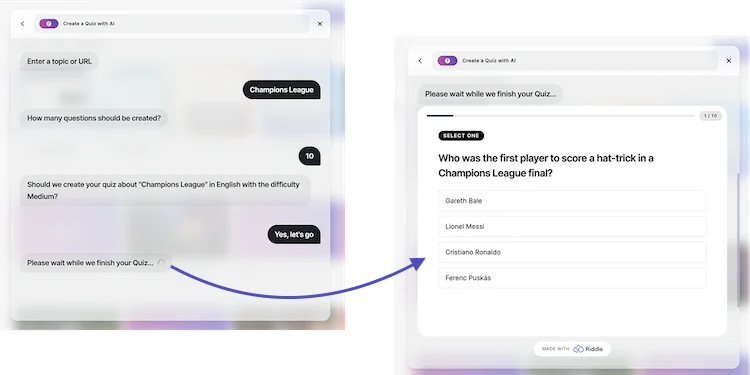
The goal is practical efficiency. AI shortens production cycles and lowers the cost of testing ideas, without replacing editorial judgment.
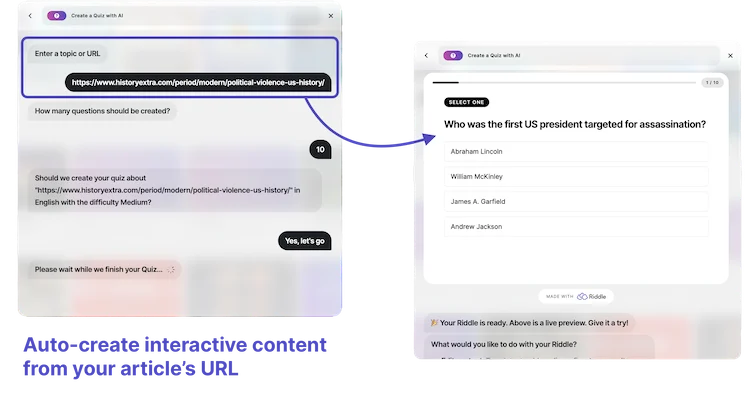
LeadQuizzes includes a basic AI wizard for content creation. The tool generates text-only quiz questions from a topic or URL, which users then review and select manually.
This approach works well for individual contributors or small teams creating quizzes one at a time, but it offers less support for rapid publishing or automated workflows common in publisher environments.
API Access, Automation, and Scalable Workflows
As interactive content becomes a repeatable system rather than a one-off tactic, automation matters more.
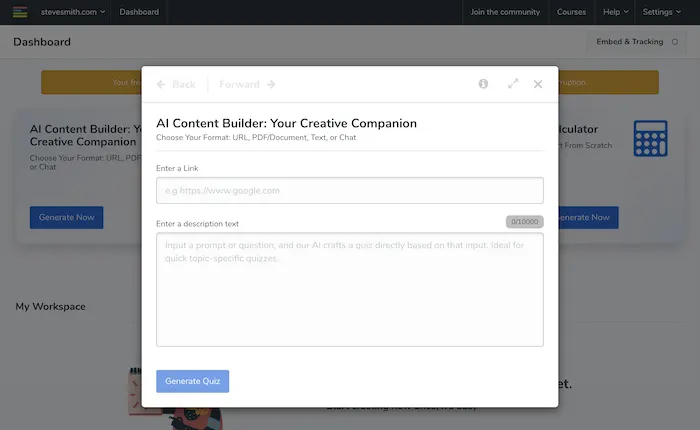
Riddle offers a range of content automation capabilities – from one-off AI to a comprehensive AI and API creation and automation workflow.
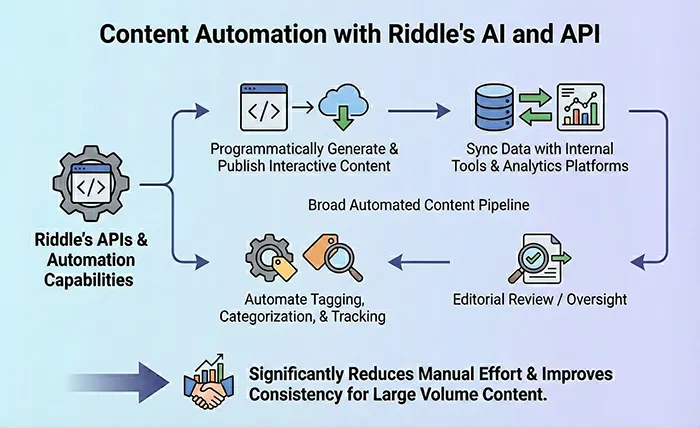
It offers flexible APIs that support programmatic creation, management, and updating of interactive content. This makes it possible to integrate interactive modules directly into CMS workflows, automate tagging and embeds, and standardize tracking at scale.
For organizations publishing frequently, this changes how interactive content is used. It becomes part of the infrastructure, not a manual exception.
LeadQuizzes supports integrations focused primarily on marketing workflows. Data flows into CRM and email systems for follow-up and nurturing, but there is no emphasis on APIs or webhooks for content automation or publishing pipelines.
Monetisation – Beyond Lead Generation
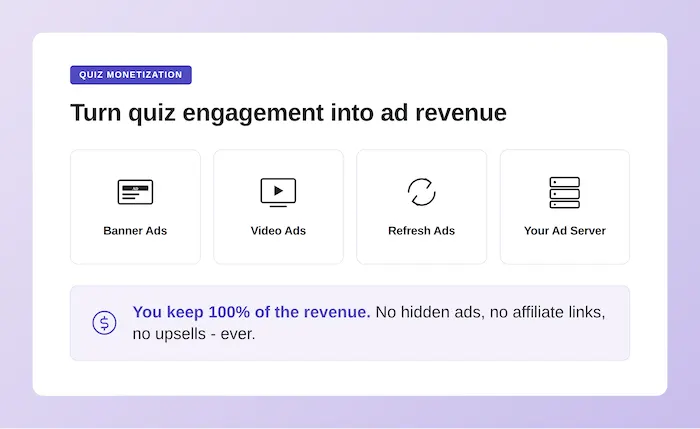
For publishers and media companies, interactive content isn’t just a lead generation tool – it’s a direct revenue channel. Riddle and LeadQuizzes take very different approaches here:
Riddle:
- Serve your own ads and sponsorship units directly inside quizzes, polls, and games – keeping full control (and 100% of the revenue)
- Refresh surrounding page ads as users engage, increasing impression volume without adding more content
- High revenue native sponsorship formats (fully branded quizzes, automated contests, mini-games) can be sold and executed with zero development work
LeadQuizzes:
- No native ad or sponsorship support
- Monetisation beyond lead capture relies entirely on external page infrastructure
For organizations where interactive content needs to pull its weight commercially – not just feed a CRM – that difference matters.
Analytics and Reporting
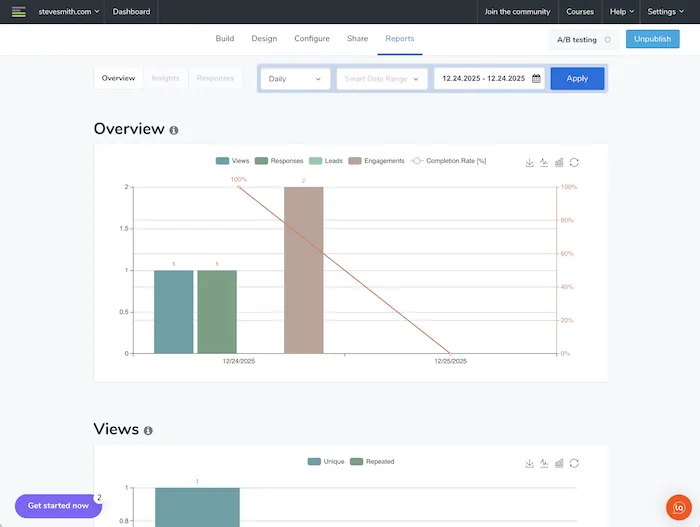
Riddle’s analytics focus on engagement. Completion rates, drop-off points, time on site, and repeat participation help teams understand what resonates with audiences and why.
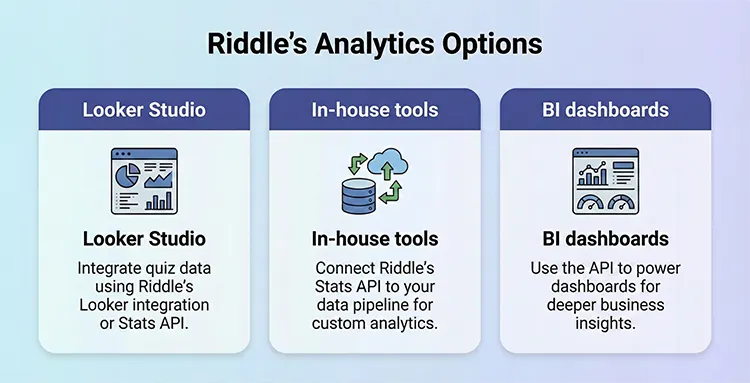
LeadQuizzes analytics are more outcome-focused, centered on scoring, segmentation, and lead performance on a tactical per-quiz basis, compared to team or account-wide dashboards.
Integrations and First-Party Data Workflows
Both platforms integrate with common CRM, email, and marketing automation tools.
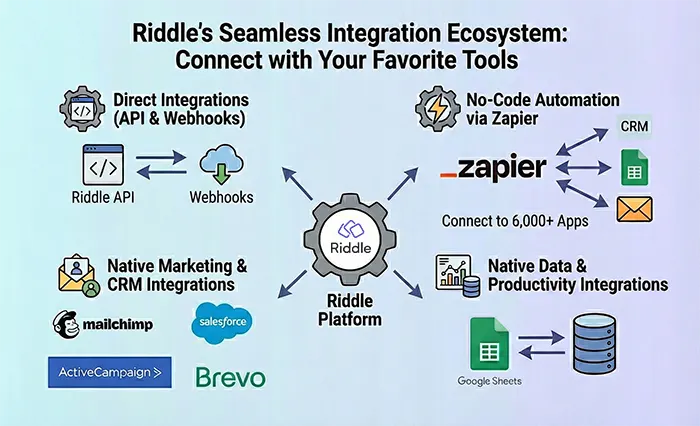
Riddle emphasizes first-party data workflows and lead generation, keeping audience data under the customer’s control rather than relying on third-party trackers. Data collected through interactive content can use native integrations (like Salesforce) or Riddle’s webhook and API can be routed directly into existing analytics, CRM, or data warehouse tools, supporting long-term audience insights beyond individual campaigns.
This approach aligns well with privacy-first strategies and the broader shift away from third-party cookies.
For publishers and content-led teams, it also means interactive content can inform editorial and engagement decisions, not just lead capture. Over time, this creates a more durable data asset that supports personalization and retention.
LeadQuizzes integrates effectively with sales and marketing stacks designed around lead nurturing and conversion. Quiz responses and scores can be passed into CRM and marketing automation platforms to trigger follow-ups, segmentation, and outreach workflows. This makes it easier for revenue-focused teams to connect interactive content directly to downstream actions.
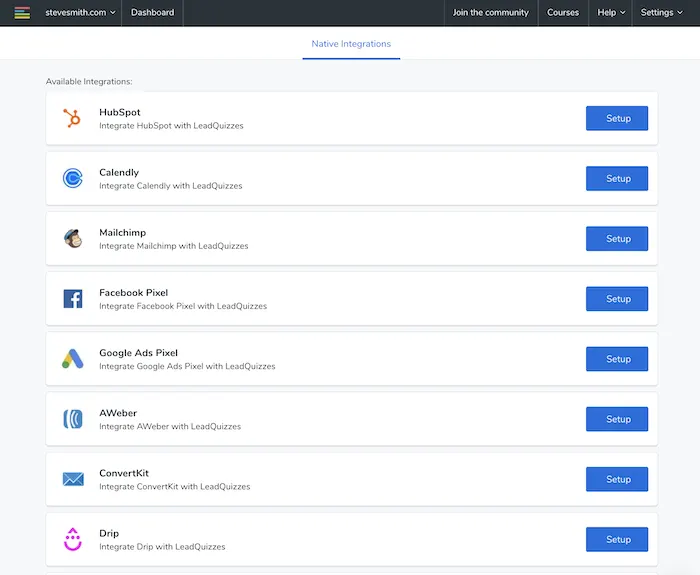
The emphasis is on turning engagement into qualified leads rather than building long-term audience profiles. For organizations centered on sales funnels, this integration model can be straightforward and efficient.
GDPR and Data Privacy Considerations
Data privacy isn’t just a checkbox. It’s foundational to how interactive content platforms work with audiences.
Riddle is 100 percent EU-based, operates its own servers, and avoids third-party trackers. This privacy-first architecture gives organizations clearer control over where data is processed and how it is handled, which can simplify GDPR compliance and internal reviews.
Because Riddle runs on infrastructure it controls, customer data stays within a transparent boundary. This supports data sovereignty requirements and makes it easier to explain data practices to partners, advertisers, and users. The absence of third-party trackers also aligns with broader shifts toward consent-based analytics and first-party data strategies.
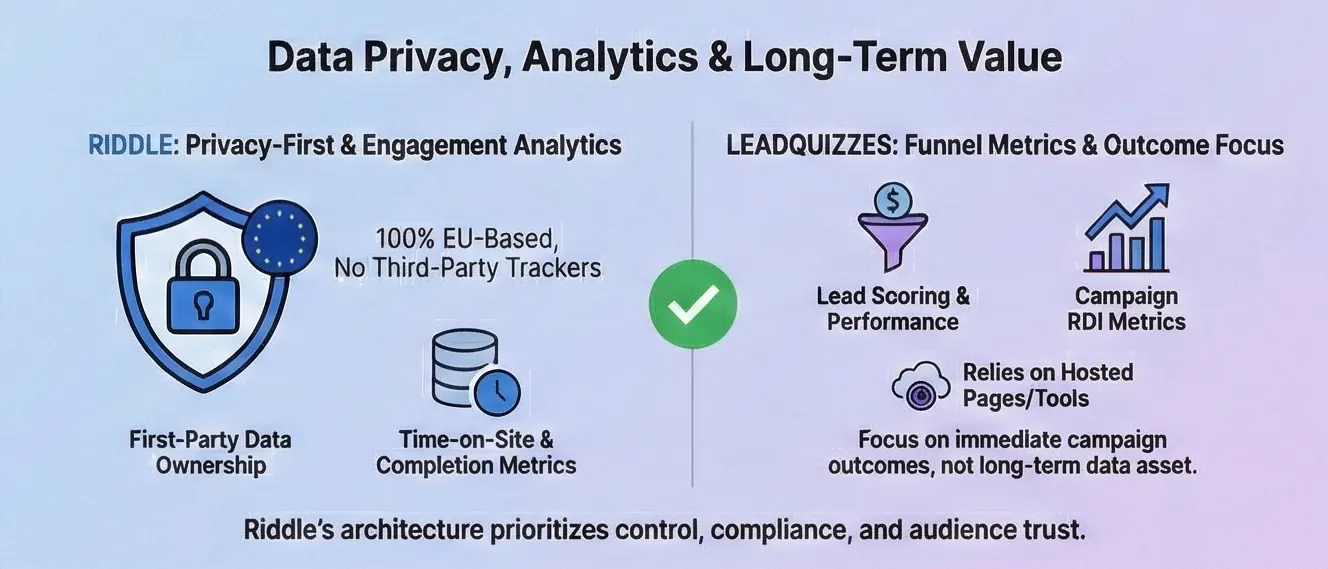
LeadQuizzes relies more heavily on hosted pages and third-party tools in certain workflows, particularly around lead capture and marketing integrations. While designed to be compliant, this model can introduce additional layers into the data flow. For privacy-focused organizations, that may require extra diligence and documentation.
The difference is not compliance versus non-compliance, but architectural philosophy. Riddle prioritizes clarity and control, while LeadQuizzes emphasizes connectivity within marketing ecosystems.
Pricing and Long-Term Value
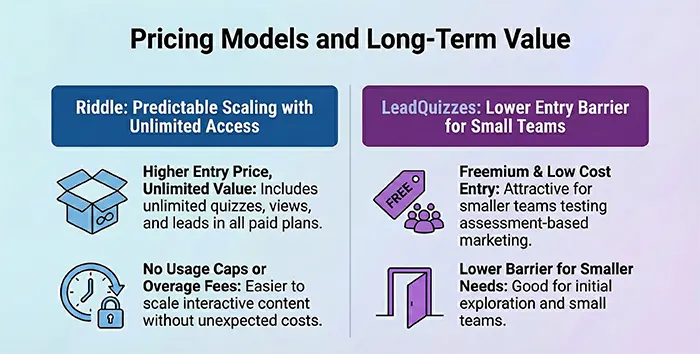
Riddle has a generally higher entry point, reflecting its focus on unlimited usage and scale-friendly pricing for publishers, brands, and media companies.
LeadQuizzes often has a lower initial price point, which can appeal to individual entrepreneurs, smaller teams or limited campaigns.
Long-term value depends on publishing volume, workflow complexity, and strategic goals.
Which Platform Is a Better Fit?
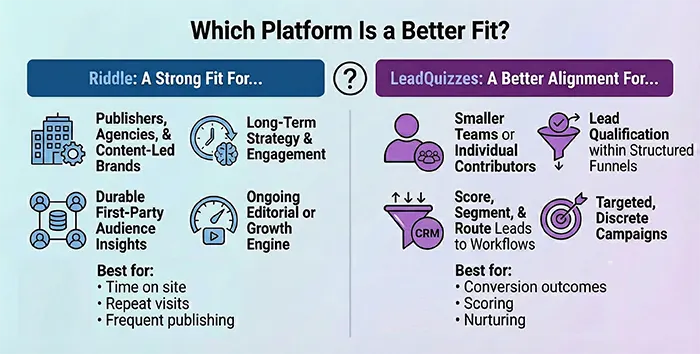
Riddle is a strong fit for organizations that publish interactive content regularly and see engagement as a long-term strategy rather than a campaign tactic. It works particularly well for teams that care about time on site, repeat visits, and building durable first-party audience insights across many pieces of content.
Publishers, agencies, and content-led brands often use Riddle’s enterprise-grade quiz maker when interactive formats are part of their ongoing editorial or growth engine.
LeadQuizzes aligns better with teams whose primary objective is lead qualification within structured marketing funnels. It suits organizations running targeted campaigns where quizzes are designed to score, segment, and route leads into sales or nurturing workflows.
For smaller teams or individual contributors focused on conversion outcomes, this approach can be straightforward and effective.
Final Thoughts
Riddle and LeadQuizzes reflect two different philosophies of interactive content, shaped by the audiences they serve and the problems they aim to solve.
Riddle treats interactivity as a scalable publishing format, designed to drive engagement, retention, and first-party data over time. LeadQuizzes frames interactivity as a qualification mechanism, optimized to connect quiz responses directly to marketing and sales systems.
Both approaches are valid, and neither is inherently better. The right choice depends on how interactive content fits into your broader strategy, how often you plan to publish, and whether engagement or qualification is the primary driver of value for your team.
What is the main difference between Riddle and LeadQuizzes?
The main difference is how each platform approaches interactive content. Riddle is built for engagement, publishing at scale, and first-party data, making it well suited for publishers, media companies, and content-led brands. LeadQuizzes is designed primarily for lead qualification, using quizzes and assessments within structured marketing funnels.
Is Riddle better than LeadQuizzes for publishers?
Yes, Riddle is generally a better fit for publishers. It supports frequent publishing, offers 30+ interactive formats including games, and focuses on time on site, repeat visits, and audience retention. LeadQuizzes is more campaign-oriented and less optimized for editorial workflows or large-scale content operations.
Can Riddle be used for lead generation like LeadQuizzes?
Riddle can support lead generation, but it approaches it more flexibly. Lead capture can be added when appropriate, without forcing every interaction into a funnel. This allows publishers and brands to balance engagement and monetization, whereas LeadQuizzes is more tightly focused on lead scoring and qualification.
Which platform offers more interactive content formats?
Riddle offers a significantly broader range of formats, with more than 30 interactive options including quizzes, surveys, polls, personality tests, leaderboards, and mini-games. LeadQuizzes focuses mainly on quizzes and assessments, with fewer options for game-like or editorial engagement.
Is Riddle suitable for large teams and media organizations?
Yes. Riddle is designed for enterprise use, with shared workspaces, granular permissions, global presets for branding and tracking, and APIs for automation. These features make it easier for large teams and media organizations to publish interactive content consistently and at scale.
Which platform is the better LeadQuizzes alternative for content-led brands?
For content-led brands, media companies, and publishers, Riddle is often the stronger LeadQuizzes alternative. Its engagement-first design, broad format library, publishing automation, and first-party data focus make it better suited for teams that view interactive content as a long-term asset rather than a one-off lead capture tool.