Personality quizzes are the most shared, highest-converting interactive content you can make. They are also the hardest to get right. Anyone can write five results and a dozen questions. Getting someone to read their result and think “wow, that is actually me” is the hard part, and it is where most quizzes fall flat. Here is how to create a ‘Big Five’ personality quiz that doesn’t.
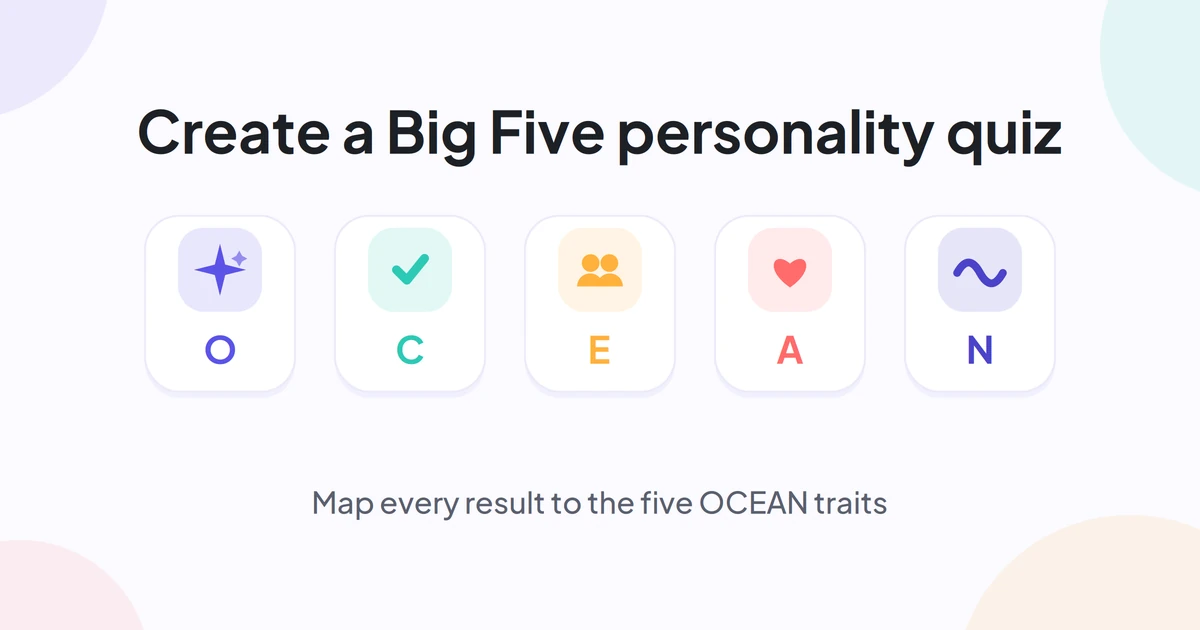
The good news: there is a proven framework for it, the ‘Big Five’, and it takes a lot of the guesswork out. This guide walks you through building a ‘Big Five’ personality quiz that actually lands, and shows you how Riddle (AI included) handles the heavy lifting.
Big Five and the OCEAN model
So you want to build a personality quiz around the ‘Big Five’, also known as the ‘OCEAN’ model. Good choice. You can build it in minutes with our quiz maker.
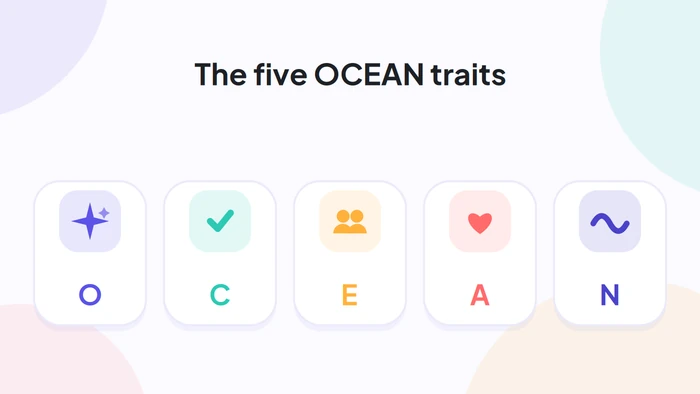
Rooted in psychology, the ‘Big Five’ boils human personality down to five core traits, covering everything from how you think to how you act around other people. When you build your quiz, your job is to represent those traits in a way that fits your topic.
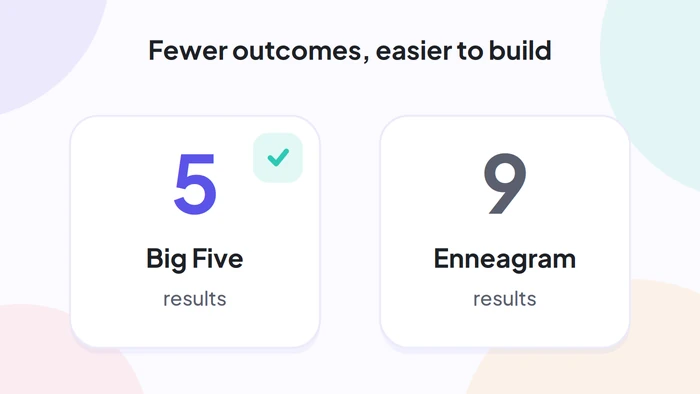
You might have seen personality tests built on the Enneagram instead. The Enneagram is a little more flexible, but we still point people to OCEAN first. Five outcomes are simply easier to build, balance, and keep accurate than nine.
Curious about the alternative? Read our guide on how to create an Enneagram personality test and compare for yourself.
What does OCEAN stand for?
OCEAN stands for Openness, Conscientiousness, Extraversion, Agreeableness, and Neuroticism – the five core traits of the ‘Big Five’ personality model.
It is a classic acronym in the quiz world, and yet almost nobody can tell you what the letters mean. Here they are:
- Openness
- Conscientiousness
- Extraversion
- Agreeableness
- Neuroticism
Build your quiz on these five and you have a real head start on giving each quiz taker an accurate result. The trick is mapping your own results back to these traits, and that is what the rest of this guide is about.
Example ‘Big Five’ personality test: “What breed of dog are you?”
Enough theory. Take our sample ‘Big Five’ test below and see how it feels from the quiz taker’s side. Notice how the questions stay light and fun while quietly gathering everything they need to land on an accurate result.
The hard part, as always, is writing questions that are fun and insightful at the same time. Here is a situational example, with the scoring spelled out.
Someone high in Conscientiousness would happily say “I never forget my belongings”. So build a question around that idea.
- Question: “You are late for a meeting. As you rush out of the house, you…”
- Answer options:
- “Grab your keys and wallet from exactly where you left them. Obviously.”
- “Spend five minutes hunting for your keys and wallet. Again.”
- Scoring:
- Anyone who picks A gets points toward Conscientiousness.
- Anyone who picks B gets nothing, because losing your stuff does not map cleanly to any of the five traits.
- Worth repeating: it is completely fine to give an answer zero points. Not every answer has to mean something.
Start with the results, not the questions
Here is the mistake most first-timers make: they write the questions first. Do it the other way around. When you build a ‘Big Five’ quiz, start with the results.
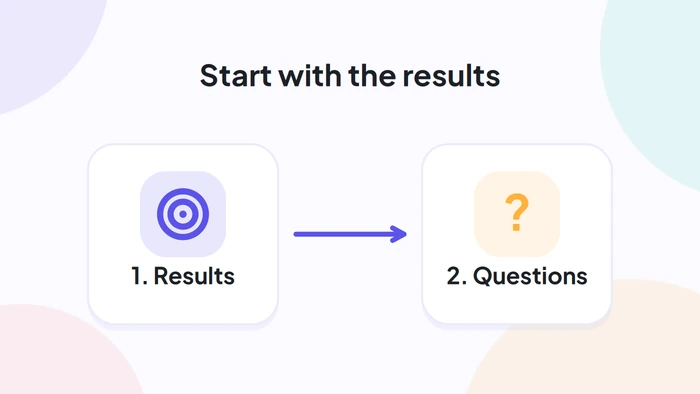
Riddle’s builder nudges you into this order on purpose. Our personality test module is built around the OCEAN model, so results come first, then you write questions to feed them.
How to write results people believe
Right, let’s get into the nitty-gritty. You have two ways to go about your results:
- Reuse the OCEAN traits as-is. Name your results “Openness”, “Neuroticism”, and so on. It works, but it is rigid, you are stuck with the five originals, and there are a hundred templates for it online already. We will not dwell on this one.
- Build your own results (this is the fun one). Pick any topic, like “What kind of dog are you?” or “What’s your leadership style?”, then map your own named results onto the five OCEAN traits underneath. Same psychological backbone, far more personality on the surface.
We are going all-in on option two. It is more fun, more flexible, and works for just about any topic you can think of.
Aim for five results (but don’t stop there)
Five is a great number to start with, and you are not locked in.
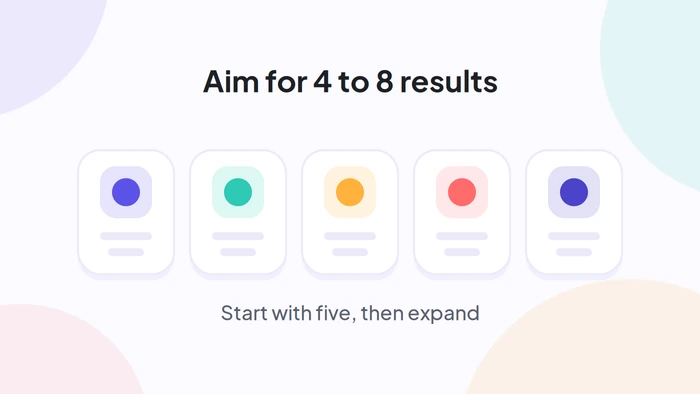
We have seen brilliant tests with anywhere from four to eight results, and our own “What breed of dog are you?” runs to a whopping 16.
Two ways to shape your results
The Big Five can sound rigid on paper. It is anything but. Two approaches work especially well:
- Keep it positive (four results). Plenty of creators quietly drop “Neuroticism”, since nobody enjoys being told they are the anxious one. If you want every quiz taker to walk away happy, leave it out. No harm done.
- Mix and match (five or more). Real people are messy and rarely fit one neat box. More results let you write outcomes that blend two or three traits at once. That is exactly what we did with the dog quiz: 16 outcomes, each a mix of OCEAN traits. It is uncannily accurate, and it was a monster to build. We had a team of PhD psychologists on it, including animal psychology guru Dr. Russ King, and spent months tuning it with tens of thousands of quiz takers.
Our honest advice? Start with five clean results and nail the OCEAN matches. Walk before you run to 16.
The five OCEAN traits, one by one
To map your results properly, you need to know what each trait actually looks like. Here is the short version of each one, plus the kind of things a person high in that trait would say about themselves.
Openness
High-openness people love ideas, art, adventure, and anything new. They are curious and imaginative, though they can come across as a little scattered.
- I am always full of ideas.
- I pick up new things quickly.
- I love a bit of the unusual.
- Abstract stuff does not scare me off.
Conscientiousness
High-conscientiousness people are the organized, dependable ones. They plan, they follow through, and their friends trust them to remember the details.
- I pay attention to every detail.
- I like order and I am always prepared.
- I follow a schedule and get things done.
- I never forget my belongings.
Extraversion
High-extraversion people get their energy from other people. They are enthusiastic, talkative, and usually the ones steering the conversation.
- I am the life of the party.
- I love being the center of attention.
- I start conversations with strangers easily.
- Speaking in front of a crowd does not faze me.
Agreeableness
High-agreeableness people care deeply about getting along. They are warm, generous, and quick to put others first.
- I have a soft heart.
- I make time for other people.
- I feel what others are feeling.
- I would rather cooperate than compete.
Neuroticism
High-neuroticism people feel things intensely, especially the difficult emotions. Stress hits them harder, and small setbacks can feel bigger than they are.
- I get stressed out easily.
- My moods swing a fair bit.
- I worry about things.
- I feel down more often than I would like.
Writing the questions
Results done. Now for the questions, which is where a quiz sinks or swims. Our rule of thumb:
- 10 to 12 questions
- 3 to 5 answers each
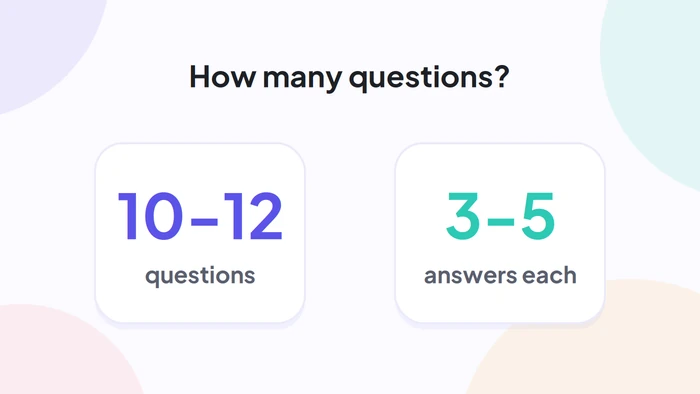
Why those numbers? Push past 12 and people bail before they see their result. Drop below 10 and there is not enough signal for a clear winner to emerge. Ten to twelve is the sweet spot.
This is exactly where a proper personality test maker pulls its weight, especially Riddle’s personality test 2.0 with its weighting and branching logic. You need to hand out different point values from a single answer to several results, and doing that by hand in a spreadsheet is misery.
Ask situational questions, not “rate yourself”
Here is the single biggest upgrade you can make to any personality quiz: ditch the “on a scale of 1 to 5, how outgoing are you?” questions and ask situational ones instead.
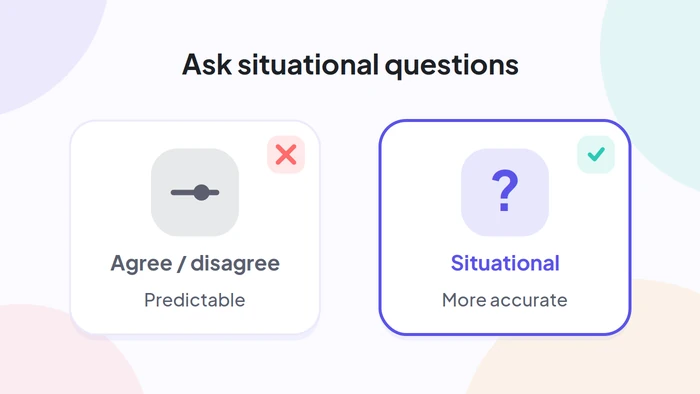
Compare “Where would you be at a crowded party?” with “On a scale from 1 to 5, how sociable are you?”. The first drops the quiz taker into a scene and asks them to react. The second just invites them to describe themselves, which they will do generously and inaccurately.
That is the real problem with agree-or-disagree scales: people quickly figure out which answer scores which result and start gaming it toward the flattering one. Situational questions hide the wiring, so the results come out far more honest.
Match answers to results
Situational questions are only half of it. Each answer still needs to map cleanly to your results.
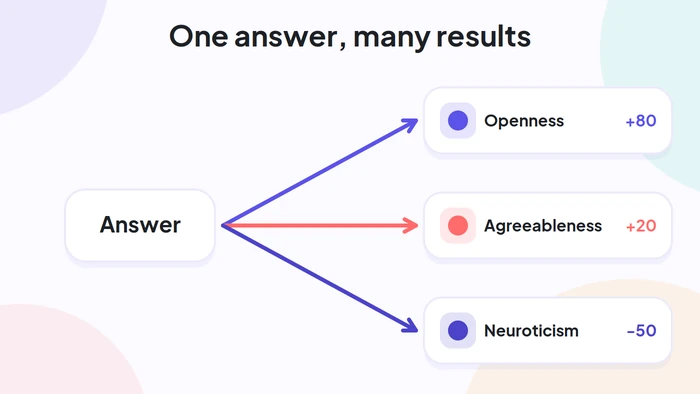
Say your “What kind of shoe are you?” quiz has someone answer “Behind the bar, inventing a new cocktail”. That screams Openness (experimental, creative), which maps to your “Beat-up tennis shoe” result. Give it a big positive score, say +80.
But answers rarely point to just one thing. That same cocktail answer also hints at Agreeableness (“always happy to help out”), so you might give “Beat-up tennis shoe” (Openness) +80 and “Fuzzy house slippers” (Agreeableness) +20. And if an answer makes a result clearly wrong, you can score it negative to push that result away. One answer, several results, each nudged up or down.
Once this clicks, questions come easily:
- Picture a situation, then write reactions that quietly line up with your results.
- Go off-topic on purpose. Not every question needs to be about shoes.
- Our cocktail question has nothing to do with footwear, yet it still tells us plenty about the quiz taker.
Mix on-topic and off-topic questions
We like a blend of roughly 60 percent on-topic and 40 percent off-topic, all of them situational. Here is an on-topic one:
- Question: You show up for tennis with friends and realize you forgot your shoes. You…
- Answer options:
- Tell them to start without me while I sprint home for the right shoes. (Conscientious)
- Play in whatever I have on and laugh it off when I slip. (Openness)
- Play barefoot. Why not. (Extraversion)
- Wave them on and watch from the bench, quietly mortified. (Neuroticism)
Make it adaptive with branching logic
Every quiz taker getting the same questions in the same order is fine. Reacting to how they answer is better. That is what branching logic gives you.
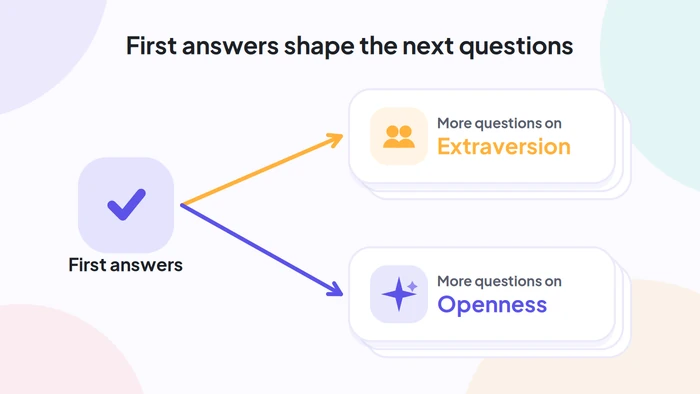
With Riddle’s branching logic, early answers can decide which questions come next. If someone’s first few answers lean strongly extraverted, you can send them down a path that digs into the finer points of that, instead of burning questions confirming what you already know. The test bends around the person taking it.
For an OCEAN quiz, that means a genuinely customized experience. You are no longer firing one fixed list of questions and hoping it fits everyone. You are building a test that follows each person’s initial responses and homes in on the traits that actually matter for them, so the final result lands even harder.
Scoring your quiz
Riddle lets you score every answer anywhere from -100 to +100 points, which hands you a huge amount of control. Positive points push a quiz taker toward a result. Negative points push them away from one. You spread those scores across one or more results, and whoever finishes on top wins.
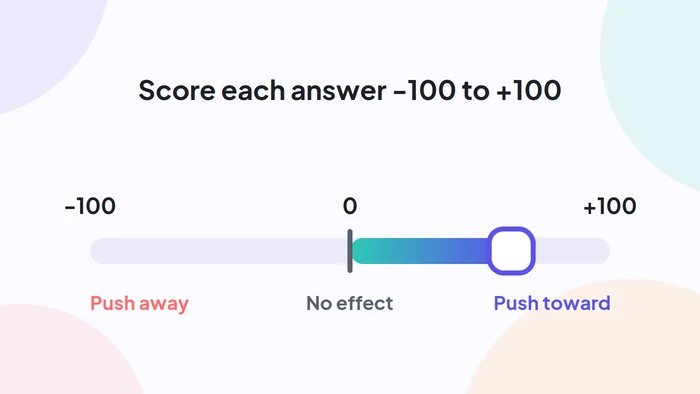
That negative range is the part people forget to use. If an answer makes a result clearly wrong, do not just give it zero, score it negative and take that result off the table. It is one of the quickest ways to make a quiz feel sharper and more accurate.
You can also show quiz takers how they did on the other results with our extended results feature. Someone might land on “Authoritative” as their main management style, then see they were also 55 percent “Mentoring” and 38 percent “Collaborative”. People love this. It gives them the full picture and gives them something to share.
Keep the results balanced
The golden rule: every result needs a fair shot at winning.
- Add up the points available for each result and check they are roughly level.
- It is easy to accidentally load one result with too many points, so it wins far too often and stops feeling accurate.
- This is much easier to manage with five results than with sixteen, which is one more reason to start small.
Our score configurator shows you the balance at a glance. Three quick scoring habits worth keeping:
- Stick to moderate values for most answers. Something around +1 to +10 is plenty for a typical answer.
- Save the extremes for the dead giveaways. A +100, or a hard -100, is your big gun. Fire it only when an answer basically screams a particular result, or clearly rules one out, because those numbers can swing a 10 to 12 question quiz on their own.
- Use negatives on purpose. Scoring an answer negative against a result is the cleanest way to stop the wrong people ever landing on it.
Put a call-to-action on every result
Here is a step most quizzes skip, and it is a shame. The results screen is the one moment you have someone’s full attention. They just spent two minutes thinking about themselves, and now they are leaning in. Do not send them to a dead end.
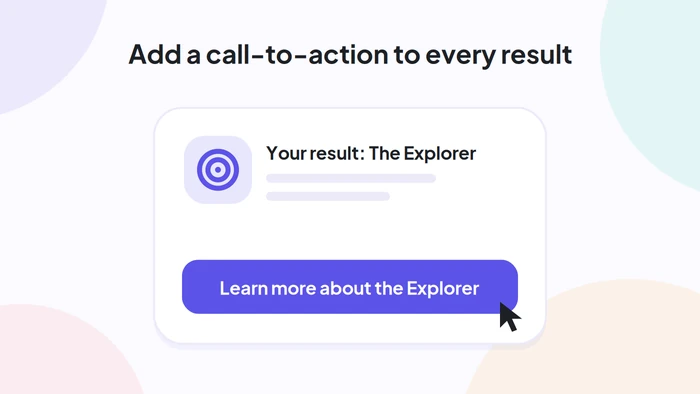
In Riddle, you can add a call-to-action button to any result and point each one wherever it makes sense:
- Recommend a product. Send “The Explorer” to one collection and “The Homebody” to another.
- Match them to content. Point each result at the article, playlist, or newsletter that actually fits them.
- Capture the lead. Drop in a signup or a tailored offer while interest is at its peak.
Because every result can carry its own button and its own destination, one quiz can quietly route very different people to exactly the right next step. More on this in our guide to using personality quizzes to engage your audience.
Skip the blank page: create with AI (fast!)
Writing results, situational questions, and balanced scoring by hand is exactly why a good personality test can eat half a day. Our AI quiz maker does the first draft in seconds.
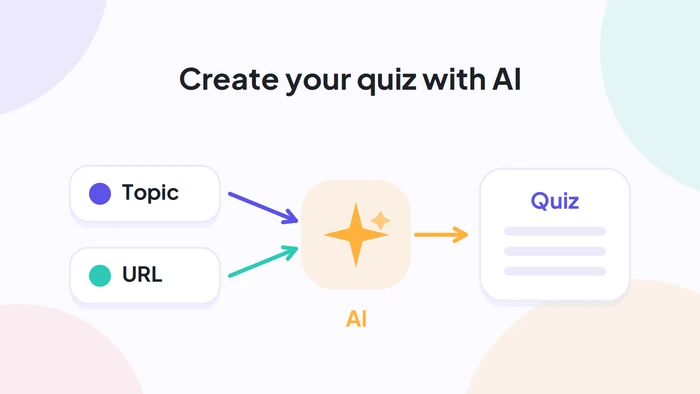
- From a topic. Type in “What kind of traveler are you?” and the AI drafts results, questions, and answers, all built on the OCEAN traits.
- From a URL. Paste an article link and it spins up a matching quiz, which is perfect for publishers turning a story into something interactive.
You stay in the driver’s seat the whole time. Rewrite a result, sharpen a question, retune the scoring, then publish. The AI just gets you off the blank page.
Build at scale with the API
Publishing quizzes by the dozen? Our API lets you create and publish them programmatically, straight from your CMS, without your team ever leaving their workflow.
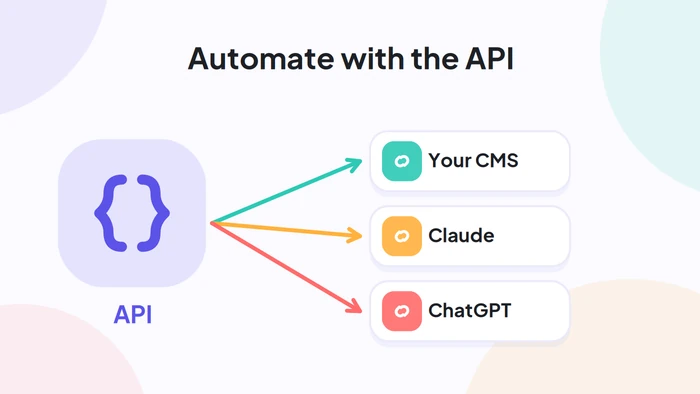
You can also wire Riddle up to Claude, ChatGPT, and other LLMs through MCP, so a whole Big Five quiz is one prompt away in whichever assistant you already use. Here is how to connect Riddle to Claude to get going.
Last step: test, test, test
Everything is built and balanced, and your finger is hovering over publish. Not yet. Give it a few run-throughs first.
Take the quiz a few times, each time aiming for a specific result, and check you actually get it. If you do not, your scoring is off somewhere, usually one question handing out too many points. Then rope in a few colleagues. Fresh eyes catch the things you have long stopped seeing.
That is it. A little effort here pays off, because personality tests still post the best opt-in and share rates of the 35-plus interactive formats we offer.
Further reading on OCEAN personality tests
Building a genuinely insightful Big Five test is part craft, part science. For more on the craft, see this guide from our quiz team. For the science, the Science Vs podcast episode on personality tests is a great listen, where host Wendy Zukerman digs into research showing the Big Five beats Myers-Briggs and the Enneagram at actually classifying personality.
Handy resources
- Wikipedia: a solid summary of the five traits
- Healthline: what the traits can tell you
- Positive Psychology: the theory behind the model
- Riddle: how a color quiz predicts which car your readers would buy
- Likert scale quiz: a handy alternative to OCEAN
- University of Oregon: the Big Five trait taxonomy
Got a question? Just ask
Want a hand building your own Big Five / OCEAN quiz with Riddle? Reach out on support chat or email us at hello@riddle.com. Good luck with your OCEAN test.
Frequently asked questions
What is the Big Five (OCEAN) personality model?
The Big Five, also called OCEAN, is a psychology-based model built on five traits that capture core human personality: Openness, Conscientiousness, Extraversion, Agreeableness, and Neuroticism.
What does OCEAN stand for?
OCEAN stands for Openness, Conscientiousness, Extraversion, Agreeableness, and Neuroticism, the five dimensions of the Big Five personality model.
Should I use the Big Five or the Enneagram for a personality quiz?
Both work, but the Big Five (OCEAN) is the easier starting point because it has only five outcomes versus nine for the Enneagram, which makes the quiz simpler to build while still giving accurate results.
How do I create a Big Five personality quiz?
Build your results first, then write situational questions that represent the five OCEAN traits, map each answer to those traits with point values, and balance and test before you publish. Riddle’s personality quiz module walks you through it in that order.
Can I create a Big Five quiz with AI?
Yes. Riddle’s AI quiz maker drafts a full personality quiz from a topic or a URL in seconds, building results, questions, and answers around the OCEAN traits. You can then edit everything before publishing.
How many questions should a Big Five personality quiz have?
Aim for 10 to 12 questions with 3 to 5 answers each. Fewer than 10 rarely produces a clear winning result, and more than 12 tends to lose people before they finish.
Can I add a call-to-action to quiz results?
Yes. You can add a call-to-action button to any result and link it to a product page, an article, a signup form, or any URL, so each outcome points the quiz taker to the most relevant next step.
Can I build personality quizzes through an API?
Yes. Riddle offers an API to create and publish quizzes programmatically, and you can connect Riddle to Claude, ChatGPT, and other LLMs via MCP to generate quizzes from a prompt.
Is the Big Five model accurate?
Yes. The Big Five is grounded in decades of psychological research, so a quiz built carefully around the five traits has a high likelihood of giving each quiz taker an accurate result.
Can I make an adaptive personality quiz?
Yes. Riddle’s branching logic lets the quiz change based on how someone answers, so you can send each quiz taker down a tailored path of follow-up questions and home in on the traits that matter most for them.