

Riddle vs Qzzr: Same Quiz Platform, Different Use Cases
In 2026, quiz platforms are increasingly evaluated not just on features, but on how well they scale with traffic, teams, data, and long-term strategy. The comparison between Riddle and Qzzr is somewhat unique because these two products share the same foundation.
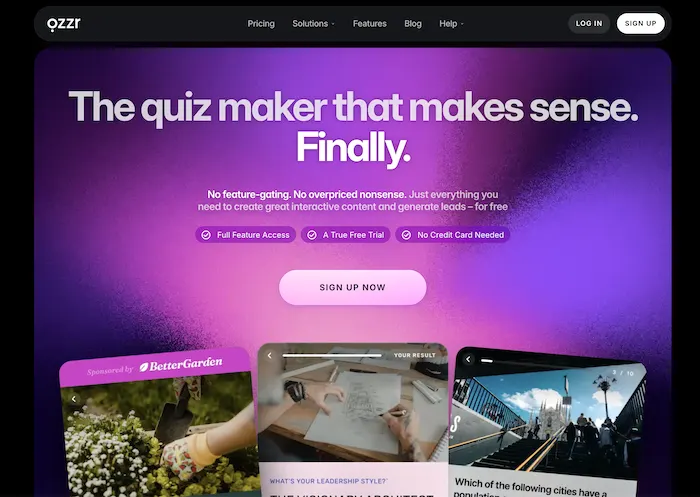
Qzzr is a sister product to Riddle’s quiz maker, built on the same underlying technology and sharing the vast majority of core functionality. In practice, around 95 percent of features overlap between the two platforms. Both support modern, high-performance quizzes and interactive content with a similar look, feel, and creation experience.
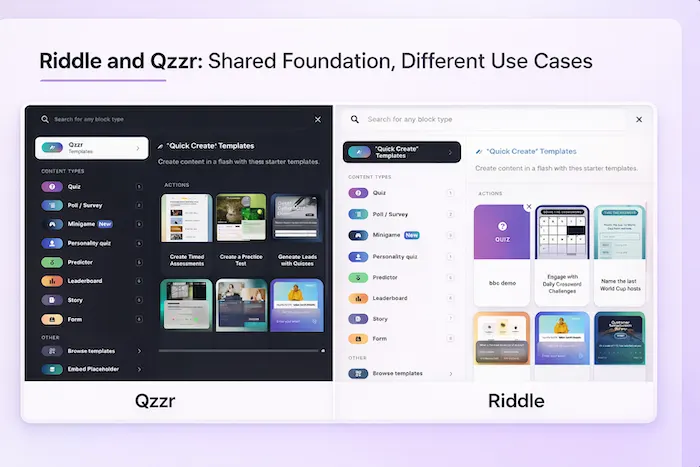
Where they differ is not in what they can do, but in who they are designed for.
This comparison focuses on differences in scale, pricing, collaboration, customization, automation, AI, monetization, analytics, and growth path, rather than forcing a feature-by-feature breakdown that would not reflect how the products are actually used.
Read the full ‘Ultimate Quiz Maker Comparison (2026)’.
Riddle vs Qzzr at a Glance
| Area | Riddle | Qzzr |
|---|---|---|
| Core purpose | Enterprise-grade interactive content at scale | Simple, affordable quizzes for individuals |
| Feature set | Full Riddle platform | Nearly identical core quiz features |
| Target users | Publishers, media, brands, enterprises | Coaches, creators, very small businesses |
| Pricing model | Unlimited usage on paid plans | Free up to 300 completions, then $9 per month |
| Traffic limits | Unlimited | Designed for low to moderate usage |
| Collaboration | Multi-user, granular roles | Single-user account |
| Customization depth | CSS, custom fonts, project presets | Extensive visual customization |
| Automation and APIs | Full APIs and automation | Limited, manual workflows |
| Monetization | Built-in ad slots | Not supported |
| Best fit | High-traffic, multi-team environments | Solo users and early-stage projects |
Shared Features and Core Capabilities
Because Qzzr and Riddle are built on the same foundation, the core quiz creation experience is very similar.
Both platforms support:
- High-performance quizzes and interactive content
- Modern, responsive designs
- Embeddable experiences for websites and landing pages
- Lead capture and basic analytics
- Fast setup with minimal technical overhead
For individual users creating quizzes occasionally, Qzzr delivers much of the same experience as Riddle without the complexity or cost of an enterprise platform.
Customization, Branding, and Multi-Brand Control
Both tools offer strong visual customization, but they diverge when customization needs to scale across teams and brands.
Qzzr provides extensive customization for individual creators. Users can adjust colors, layouts, and styling to match a personal brand or small business. This works well when managing a single site or a limited number of projects.
Riddle extends customization significantly for organizations managing multiple brands or properties. In addition to advanced design controls, Riddle supports:
- Full CSS customization
- Custom fonts aligned with brand guidelines
- Project presets that automatically apply the correct look, feel, tracking, and embed behavior
These presets allow large organizations to maintain consistent branding across their entire portfolio while reducing manual setup and the risk of errors.
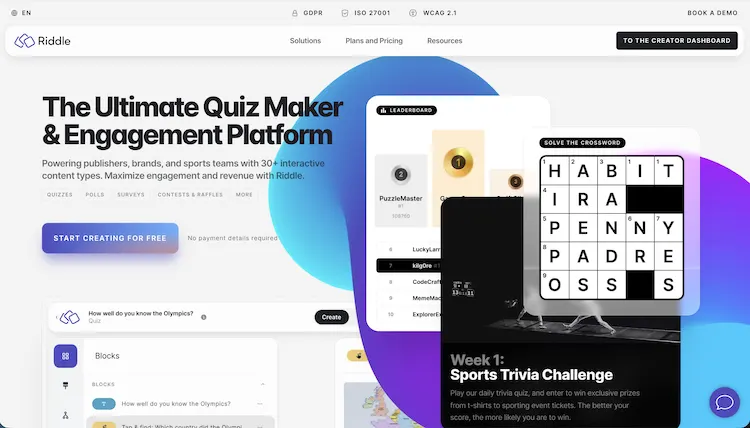
Automation, AI, and Scalable Content Creation
Automation is one of the clearest areas where Riddle and Qzzr are intentionally differentiated.
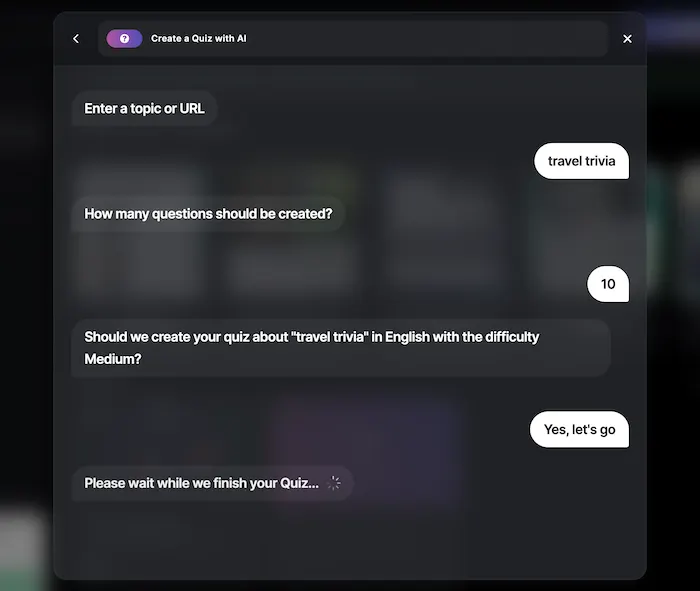
Qzzr supports AI-assisted content creation on a one-off basis:
- Generate quizzes from keywords
- Create content by submitting a URL
- Use AI as a starting point for manual editing
This approach works well for creators producing content occasionally or experimenting with ideas.
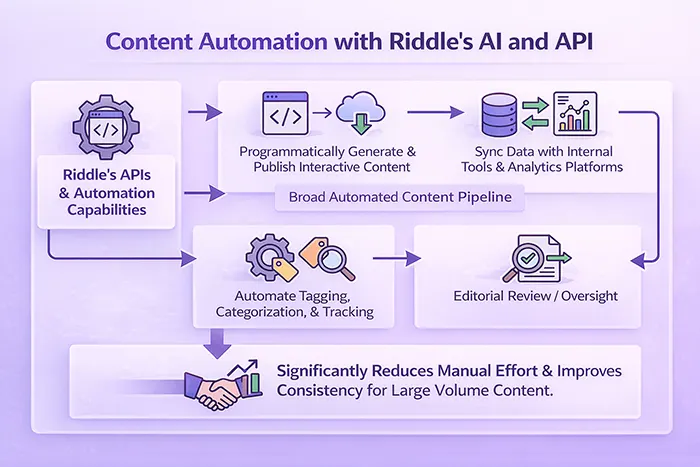
Riddle is designed for organizations that need to operationalize interactive content. It supports both AI-assisted creation:
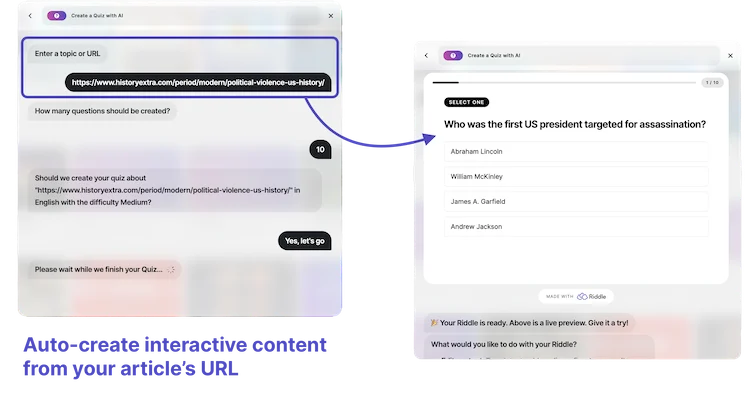
- Synchronizing its API-based builder with AI
- Automatically generating interactive content from publishers’ articles or content feeds
- Seamlessly embedding new content into pages without manual intervention
This makes it possible to scale interactive content alongside editorial or marketing output rather than treating it as a separate task.
Collaboration and Governance
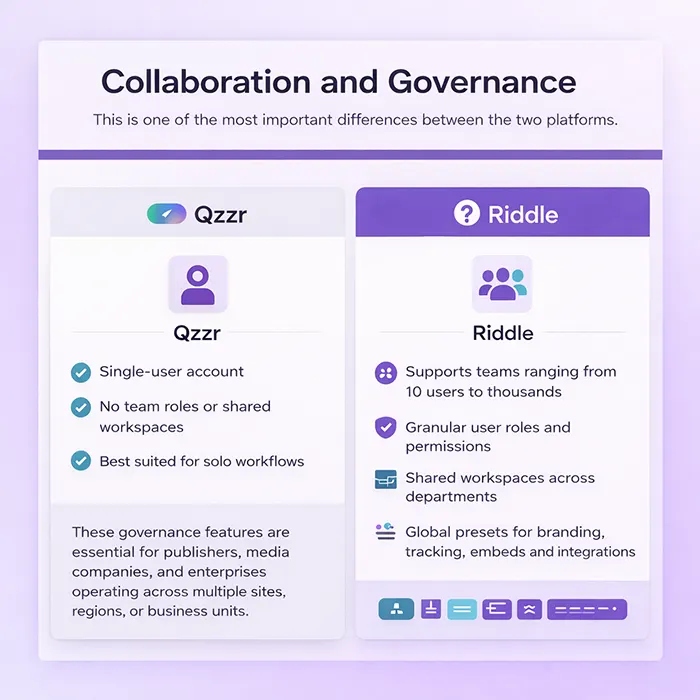
This is one of the most important differences between the two platforms.
Qzzr
- Single-user account
- No team roles or shared workspaces
- Best suited for solo workflows
Riddle
- Supports teams ranging from 10 users to thousands
- Granular user roles and permissions
- Shared workspaces across departments
- Global presets for branding, tracking, embeds, and integrations
These governance features are essential for publishers, media companies, and enterprises operating across multiple sites, regions, or business units.
Monetization and Advertising
Monetization is another clear point of separation.
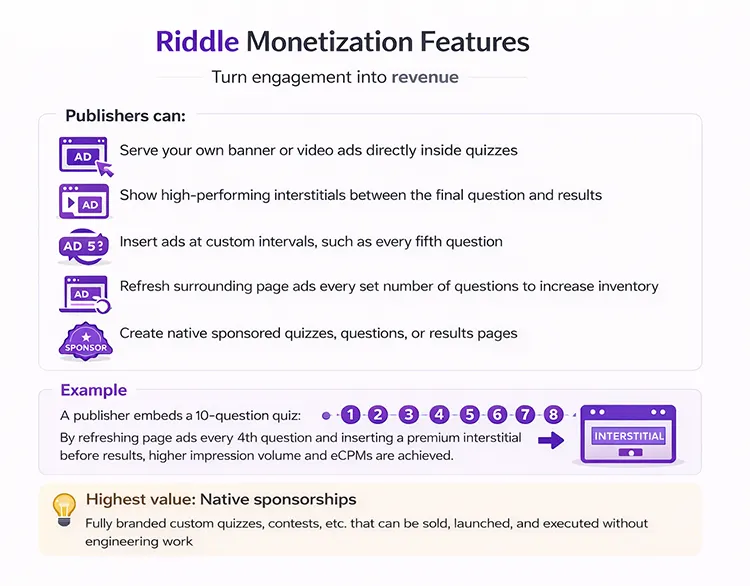
Riddle supports monetization directly within interactive content for publishers and media brands:
- Insert their own ads into quiz advertising slots
- Keep 100 percent of the advertising revenue
- Align interactive content with existing ad strategies
This makes Riddle suitable for ad-supported environments and revenue-driven engagement strategies – including everything from programmatic ads, to data collection, sponsored content, and fully automated quiz contests.
For a deeper look, check out Riddle’s “Publisher Revenue From Interactive Content: 6 Strategies That Work in 2026”.
Qzzr does not include built-in advertising or monetization functionality. It is designed primarily for content creation and engagement rather than revenue generation.
Advanced Analytics, Tracking, and Data Infrastructure
Qzzr provides basic analytics suitable for individual creators, but it does not support the same depth of tracking integrations or enterprise reporting workflows.
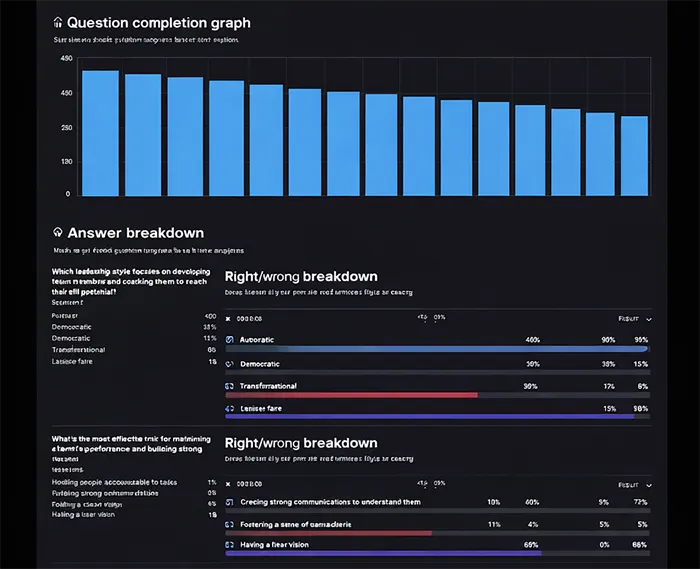
As organizations scale, analytics and tracking requirements become more complex.
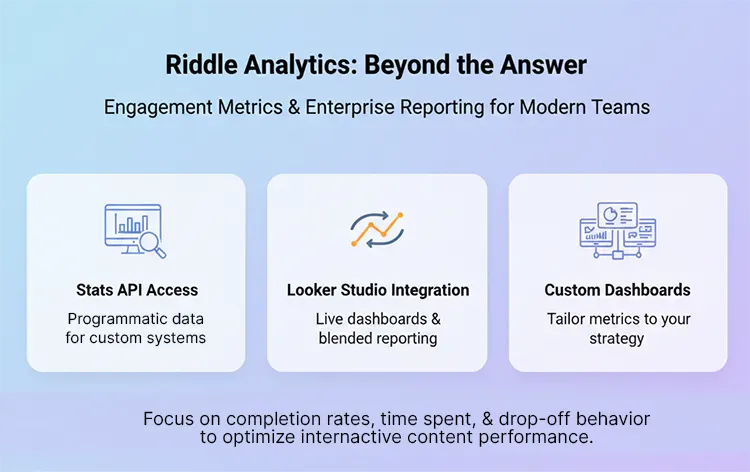
Riddle includes enterprise-grade analytics and data capabilities:
- A robust API for statistics, quiz creation, and embeds
- Looker Studio integration for in-depth reporting and visualization
- Embed placeholders to schedule and automatically display new content without updating page code
- Support for advanced tracking tools such as Google Tag Manager, Matomo, Adobe Analytics, and similar platforms
These features allow organizations to measure the true impact of interactive content across campaigns, subscriptions, and audience growth initiatives.
Leaderboards and Multi-Content Challenges
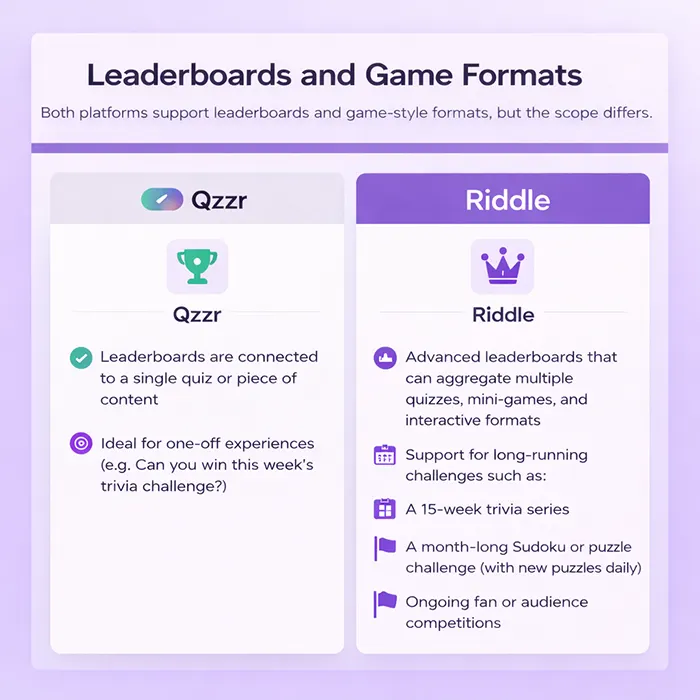
Both platforms support leaderboards and game-style formats, but the scope differs.
Qzzr
- Leaderboards are connected to a single quiz or piece of content
- Ideal for one-off experiences (e.g. Can you win this week’s trivia challenge?)
Riddle
- Advanced leaderboards that can aggregate multiple quizzes, mini-games, and interactive formats
- Support for long-running challenges such as:
- A 15-week trivia series
- A month-long Sudoku or puzzle challenge (with new puzzles daily)
- Ongoing fan or audience competitions
This flexibility is especially valuable for publishers, sports organizations, and media brands running long-term engagement programs.
Pricing Philosophy and Growth Path
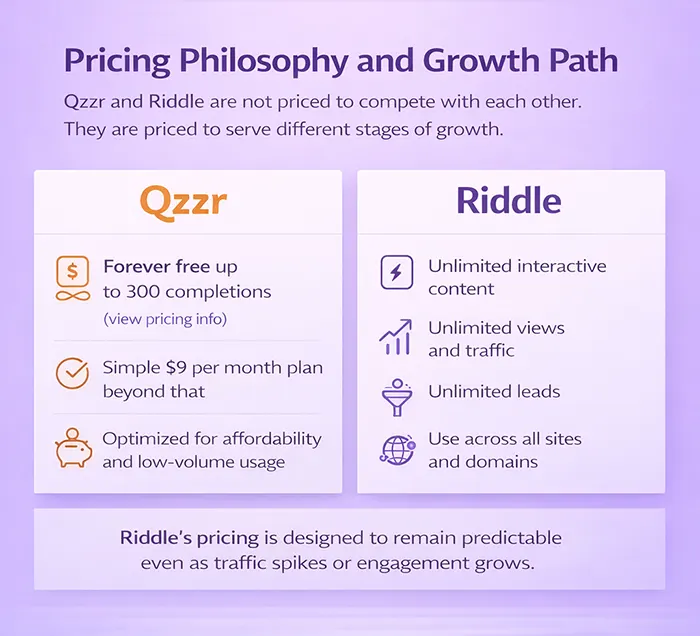
Qzzr and Riddle are not priced to compete with each other. They are priced to serve different stages of growth.
Qzzr pricing
- Forever free up to 300 completions (view pricing info)
- Simple $9 per month plan beyond that
- Optimized for affordability and low-volume usage
Riddle pricing
- Unlimited interactive content (view pricing info)
- Unlimited views and traffic
- Unlimited leads
- Use across all sites and domains
Riddle’s pricing is designed to remain predictable even as traffic spikes or engagement grows.
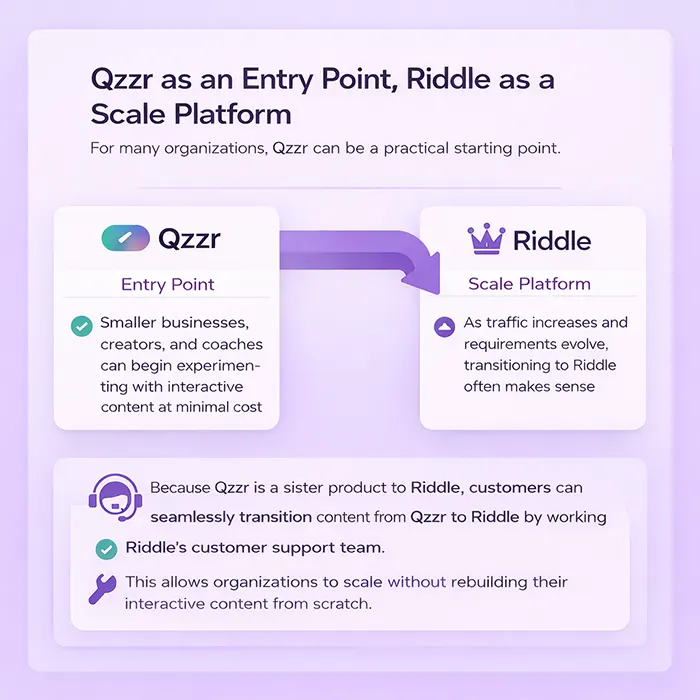
Qzzr as an Entry Point, Riddle as a Scale Platform
For many organizations, Qzzr can be a practical starting point.
Smaller businesses, creators, and coaches can begin experimenting with interactive content at minimal cost. As traffic increases and requirements evolve, transitioning to Riddle often makes sense.
Because Qzzr is a sister product to Riddle, customers can seamlessly transition their content from Qzzr to Riddle by working with Riddle’s customer support team. This allows organizations to scale without rebuilding their interactive content from scratch.
Accessibility Considerations
Accessibility and data protection are increasingly important requirements, particularly for organizations operating in the EU and UK. Interactive content must be usable with assistive technologies and compliant with accessibility standards (such as WCAG 2.1), while also meeting expectations around privacy and data governance.
Both platforms are built on a modern technical foundation that supports responsive, embeddable interactive content. For individual creators and small projects, this makes it possible to publish accessible experiences with relatively little setup.
Key accessibility considerations include:
- Compatibility with screen readers and assistive technologies
- Keyboard navigation and logical content structure
- Consistent behavior across desktop and mobile devices
Ensuring these standards are met across a large content library often depends on how content is structured and maintained over time.
Qzzr and Riddle are both designed to support accessibility at scale:
- Lightweight, structured formats that integrate into existing pages
- Centralized templates and presets that reduce variation
- Easier application of consistent accessibility standards across many pages
This approach is particularly valuable for publishers, media companies, and brands managing hundreds or thousands of interactive experiences.
Final Perspective
Riddle and Qzzr share the same foundation, but they are optimized for different use cases.
Qzzr makes interactive content accessible for individuals and very small businesses. Riddle takes that same core capability and extends it for organizations that operate at scale, with advanced customization, automation, monetization, analytics, and governance.
Looking ahead through 2026, the right choice depends less on features and more on how large your use case is today and where you expect it to be tomorrow.
Related quiz maker comparisons
- SurveyMonkey – classic survey and poll maker, with a limited free option.
- Involve.me – designed for smaller firms and individual creators, with e-commerce/payment options.
- Genially – free plan for creating infographics and interactive content.
What is the difference between Qzzr and Riddle?
Qzzr and Riddle share the same underlying quiz technology, but they are designed for different audiences. Qzzr is built for individual creators and very small businesses, while Riddle is designed for publishers, media companies, and organizations that need to scale interactive content.
Is Qzzr free to use?
Yes. Qzzr offers a forever-free plan for up to 300 quiz completions. After that, it uses a simple $9 per month pricing model.
When does it make sense to move from Qzzr to Riddle?
Moving from Qzzr to Riddle typically makes sense when traffic grows, multiple team members need access, or advanced customization, automation, monetization, and analytics become important.
Does Qzzr support the same quiz features as Riddle?
Qzzr supports most core quiz features. Riddle adds enterprise-focused capabilities such as CSS customization, custom fonts, project presets, advanced leaderboards, monetization tools, and deeper analytics.
How does Qzzr compare to Riddle on automation and AI?
Qzzr supports AI-assisted quiz creation on a one-off basis using keywords or URLs. Riddle combines AI with APIs and automation to generate, publish, and embed interactive content at scale.
Can Qzzr be used by publishers or media companies?
Qzzr can be used for small editorial experiments, but it is not designed for large publishers or media organizations. Riddle is better suited for those use cases due to unlimited usage, collaboration features, monetization, and analytics.
Does Qzzr support advanced analytics and tracking?
Qzzr includes basic analytics. Riddle adds enterprise-grade analytics, including a Stats API, Looker Studio integration, and support for advanced tracking tools.
Can content created in Qzzr be moved to Riddle?
Yes. Because Qzzr is a sister product to Riddle, content can be transitioned from Qzzr to Riddle by working with Riddle’s customer support team.