
Quizzes, polls, and personality tests are among the best ways to collect rich first-party data. By combining answers to quiz questions and data willingly shared by the quiz taker (like name and email), you can segment your user data. This allows you better, more targeted follow-up conversations.
Riddle’s Data Layer (part of our Business and Enterprise plans) makes it possible to combine data you already have with data collected from Riddle quizzes.
The importance of rich first-party data
Imagine your ad sales team wants to know whether readers would prefer an electric car or a traditional combustion model – so they can target the right advertisers.
Normally, you would have to engage a market research firm, call your readers, or place pop-ups on your site asking which car they prefer. As you can imagine, someone reading an article won’t react positively to an unrelated pop-up about car preferences.
But when you embed this question into a personality quiz, your readers take willingly to learn more about themselves – you will get their honest answers. This data is the best possible rich first-party data you can collect from a user. This is mainly because quiz questions are answered honestly, as the quiz is taken solely for the benefit of the quiz taker – not to please a market researcher.
Instead of just gaining knowledge about your reader’s car preferences, you could use this information. For example, you could provide targeted banners or ads in your email newsletters. They can promote precisely the type of car each reader prefers.
You can add a form field to your riddle asking for the reader’s email. Or you could use our Data Layer if you already know your readers’ email or user ID if they have logged in to your site already.
Passing data to a Riddle
The Data Layer is a powerful part of Riddle’s quiz maker.
If you have information about the quiz taker that you want to combine with the quiz data, you can pass this data to the Riddle using the Riddle Data Layer.
An excellent example of this information is a campaign ID, passed in the URL. Or you have a user ID that you can send to the Riddle when a user is logged in.
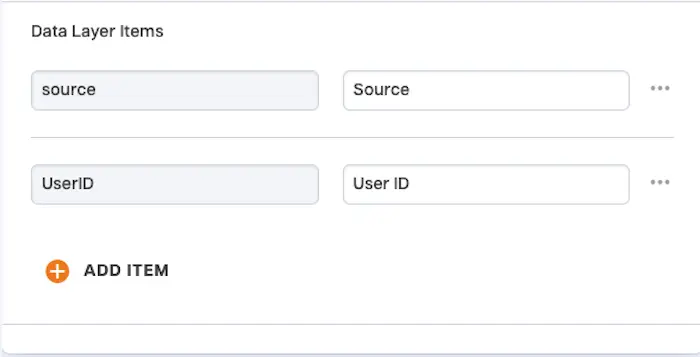
Our Data Layer can accept URL variables and data passed to a data layer object via JavaScript. You can learn more about the technical details of how this works in our documentation.
The most common use case is to pass an anonymous user ID to Riddle and then store that user ID along with the data from the riddle in your data warehouse. There, you can combine the quiz data via the user ID with the user data you stored for that ID. This way, no personal identifiable information is ever passed to Riddle, and all the data collection happens on your end.
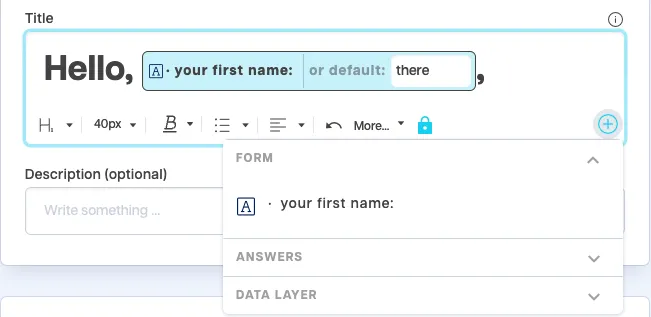
But you could pass the user’s name, email, and other information together with our variables to address the user by name or pre-fill form fields.
Another everyday use case is to store the data from URL variables with the Riddle data. You can then use this to capture campaign data along with lead forms and associate leads with campaigns to measure your campaign success.
Summary
The Riddle Data Layer allows you to pass any data to the Riddle. Then, you can store that data along with all the other data collected with the riddle. You can use it to:
- Enrich data you already possess for your logged-in users
- Track campaign effectiveness by storing your UTM tags with the lead form data
- Save your logged-in users time. Don’t ask them to fill out forms with data that they already entered when logging into your site
To find out if this is a solution for your company, please sign up for our free 14 day trial. You do not have to enter a credit card. And the Riddle Data Layer is unlocked – as are all of our other features. This lets you completely test Riddle for your use case before choosing one of our subscription plans.
Instructions on how to use the Riddle Data Layer
Please visit our online documentation to learn how to use the Data Layer with sample scripts and a live example.
Frequently asked questions
What is first-party data and why does it matter?
First-party data is information from your audience’s interactions with your own channels. Combined with details a quiz taker volunteers, such as name and email, it lets you segment users and have better, more targeted follow-up conversations, without relying on third-party cookies.
How do quizzes collect rich first-party data?
By embedding a useful question inside a personality quiz, for example whether a reader prefers an electric or combustion car, you get honest answers, because people take the quiz for themselves rather than to please a market researcher.
What is Riddle’s Data Layer?
The Data Layer, part of Riddle’s Business and Enterprise plans, lets you combine data you already have, such as a campaign ID or logged-in user ID, with data collected from a Riddle, passed via URL variables or JavaScript.
How can I collect quiz data without storing personal data on Riddle?
Pass an anonymous user ID to the Riddle, then store that ID alongside the quiz data in your own data warehouse and match it to your user records. No personally identifiable information is ever sent to Riddle.
How do publishers use first-party quiz data?
They turn it into targeted opportunities, for example surfacing readers’ car preferences to pitch the right advertisers, or showing tailored banners and ads in email newsletters that match each reader’s stated interest.